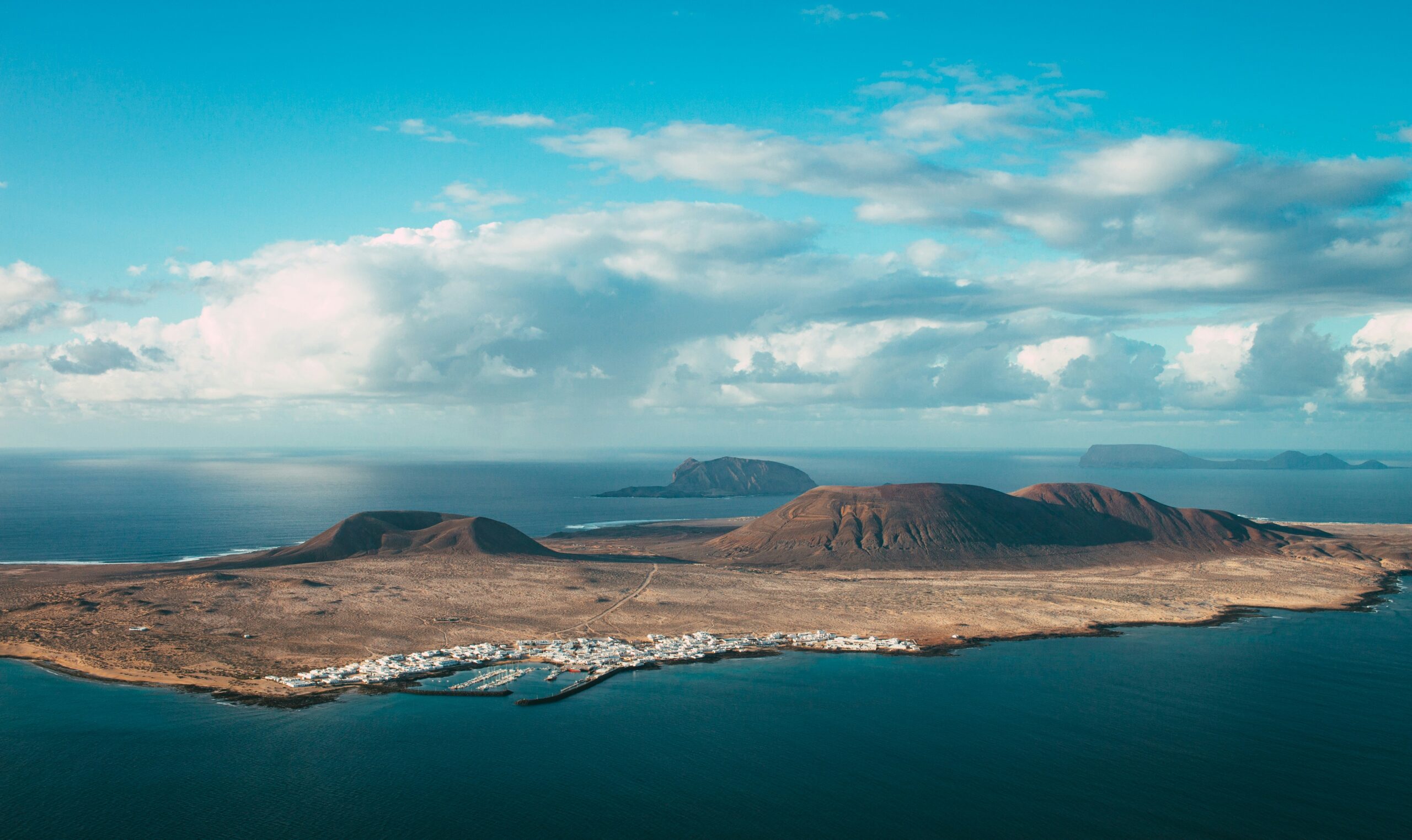
Rising from the Atlantic Ocean off northwest Africa, the Canary Islands present landscapes more reminiscent of Hawaii or Iceland than mainland Spain. These volcanic archipelago islands showcase nature’s raw creative power—from recent lava flows to ancient calderas, from lunar deserts to laurel forests predating the Ice Age.
Geological Wonder
The Canary Islands owe their existence to volcanic activity that began roughly 20 million years ago, with eruptions continuing into modern times. The most recent occurred in 2021 on La Palma, reshaping the island’s landscape and reminding residents and visitors alike that this is geologically active territory.
Each island represents a different stage in volcanic evolution. Lanzarote and Fuerteventura, the oldest and eastern-most islands, show heavily eroded volcanic features. The western islands—Tenerife, La Palma, and El Hierro—display younger, more dramatic volcanic landscapes with recent lava flows and active vents releasing sulfurous steam.
Tenerife: Spain’s Highest Peak
Tenerife centers on Mount Teide, Spain’s tallest peak at 3,718 meters. This active volcano dominates not just the island but much of the archipelago—its snow-capped summit visible from neighboring islands on clear days. Teide National Park, a UNESCO World Heritage site, surrounds the volcano with 190 square kilometers of volcanic wilderness.
The park’s landscape seems alien—fields of black and red lava rock stretch toward the volcano’s cone, punctuated by rock formations with fanciful names like Roques de García. The mineral content creates varied colors: reds from iron oxide, yellows from sulfur, blacks from basalt. Drive the winding road to the cable car station at 2,356 meters, then ride to 3,555 meters for expansive views across a sea of clouds.
Hiking trails traverse the caldera, ranging from easy walks around Los Roques to challenging ascents. Reaching Teide’s summit requires a permit (free but must be reserved weeks in advance). The effort rewards with views extending 100 kilometers on clear days, encompassing multiple islands and the African coast.
The night sky above Teide ranks among the world’s clearest. Light pollution laws protect the darkness, and several companies offer stargazing tours with telescopes. The Teide Observatory, at 2,400 meters, conducts important astronomical research and opens for guided visits.
Lanzarote: Art Meets Volcanism
Lanzarote presents the Canaries’ most striking volcanic scenery. The Timanfaya eruptions of 1730-1736 covered a quarter of the island in lava, creating a landscape of frozen waves, volcanic cones, and lava tubes. This area now forms Timanfaya National Park, accessible only by guided bus tour or on foot along designated routes.
The park’s lunar landscape appears lifeless, yet endemic species have adapted to harsh conditions. The Martian appearance attracted filmmakers—scenes from “Planet of the Apes” and other science fiction films used Lanzarote’s otherworldly terrain.
Artist César Manrique shaped how visitors experience Lanzarote’s volcanism. His architectural interventions—built into lava tubes and respecting natural forms—demonstrate harmony between human creativity and geological forces. Jameos del Agua transforms a lava tube into a concert hall and garden, complete with an underground lake hosting blind albino crabs. The César Manrique Foundation, built into volcanic bubbles, showcases how architecture can enhance rather than dominate natural features.
La Geria wine region presents Lanzarote’s most distinctive agricultural landscape. Winemakers plant individual vines in volcanic ash pits, each protected by semicircular stone walls against fierce winds. This painstaking method produces unique wines—particularly Malvasia—that taste of volcanic soil. Dozens of bodegas welcome visitors for tastings amid this surreal landscape.
La Palma: The Beautiful Island
La Palma claims the title “Isla Bonita” (Beautiful Island) justifiably. Though smaller than Tenerife, it packs extraordinary diversity into compact terrain. The Caldera de Taburiente National Park occupies a massive erosion crater nearly 10 kilometers across and 2,000 meters deep. Hiking into this verdant bowl reveals waterfalls, pine forests, and streams—a striking contrast to the volcanic terrain above.
The Cumbre Vieja ridge divides the island north-south, its volcanic cones testament to relatively recent activity. The 2021 eruption added to La Palma’s geological story, creating new land as lava reached the sea. While destructive to communities in its path, the eruption reminded visitors that they walk on living landscape.
The Roque de los Muchachos Observatory crowns La Palma’s highest point at 2,426 meters. International telescopes take advantage of some of the world’s clearest skies, protected by strict light pollution controls. Visitors can tour the facilities and, weather permitting, watch sunset paint the caldera orange and gold before stars emerge in remarkable density.
El Hierro: Primitive and Pristine
El Hierro, the smallest and westernmost Canary Island, was considered the edge of the known world by ancient geographers. Today it offers the archipelago’s most unspoiled nature. The island aims for 100% renewable energy (primarily wind and hydro), aligning environmental policy with pristine character.
El Hierro’s volcanic landscape includes the El Golfo valley, a massive landslide scar that collapsed into the Atlantic thousands of years ago. The resulting cliff face towers over agricultural terraces and scattered villages. The island’s coast alternates between dramatic lava cliffs and natural pools formed when lava entered the ocean.
La Restinga offers world-class diving in a marine reserve where volcanic formations create dramatic underwater topography. Lava tunnels, arches, and caves host diverse marine life, while the nutrient-rich waters attract pelagic species.
Laurisilva Forests: Prehistoric Survivors
Several Canary Islands preserve laurisilva—laurel forests that covered Mediterranean Europe millions of years ago but survived only here. These mist-shrouded forests, sustained by trade wind moisture, create an atmosphere both primeval and enchanted.
La Gomera’s Garajonay National Park protects the world’s largest continuous laurisilva forest, a UNESCO World Heritage site. Hiking trails wind beneath gnarled trees draped with moss and lichen, often through mist so thick visibility drops to meters. The silence is profound, broken only by birdsong and water dripping from leaves.
These forests harbor endemic species found nowhere else—plants and animals that evolved in isolation over millions of years. The vegetation filters moisture from clouds, creating year-round streams that historically sustained island agriculture.
Volcanic Beaches and Natural Pools
Canary Island beaches differ markedly from Mediterranean shores. Black sand derived from basalt characterizes many beaches, particularly in Tenerife and La Palma. These dark sands absorb heat intensely—bring sandals for midday beach visits.
Natural pools formed by lava flows create safe swimming in areas where Atlantic waves would be dangerous. Los Gigantes in Tenerife and Charco Azul in La Palma exemplify these pools, where seawater refreshes in protected basins while waves crash against outer lava walls.
Papagayo beaches in Lanzarote offer golden sand in protected coves, their color contrasting beautifully with black lava headlands and turquoise water. These rank among the archipelago’s most beautiful beaches, though popularity means early arrival is advisable.
Living with Volcanoes
Canarians have adapted to volcanic terrain in inventive ways. Traditional architecture uses volcanic stone for construction—black basalt blocks form walls that regulate temperature effectively. Flat roofs capture scarce rainwater, while courtyards create sheltered microclimates.
Agriculture exploits volcanic soil’s fertility despite harsh conditions. On Lanzarote, farmers plant in volcanic ash that retains overnight moisture. Tenerife’s banana plantations benefit from volcanic soil richness. Vineyards throughout the islands produce distinctive wines reflecting volcanic terroir.
Practical Planning
Island Selection: Tenerife offers greatest diversity and infrastructure. Lanzarote presents most dramatic volcanic scenery. La Palma suits active travelers and hikers. El Hierro and La Gomera appeal to those seeking tranquility and pristine nature.
Getting Around: Renting a car provides flexibility essential for accessing volcanic sites, though Tenerife and Lanzarote have better public transport than smaller islands. Roads are generally excellent, though mountain routes can be winding.
What to Pack: Layers are essential—temperatures vary dramatically with altitude. Coastal areas stay warm year-round, but summits can be cold and windy even in summer. Hiking boots, sun protection, and windbreaker are must-haves.
Best Time: The Canaries enjoy “eternal spring”—comfortable temperatures year-round. Winter (December-March) brings slightly cooler weather and occasional rain. Summer attracts beach-goers but can be hot at lower elevations. Spring and autumn offer ideal conditions for hiking volcanic terrain.
The Canary Islands prove that Spain contains infinite variety. These volcanic landscapes, born of fire and shaped by wind and water, offer experiences unlike anywhere else in Europe—reminding visitors that the earth beneath our feet remains dynamic, powerful, and endlessly creative.