The Michelin Guide’s 2025 Spanish edition landed like a culinary manifesto: over 200 starred establishments, including eleven three-star temples of gastronomy. But the real story of Spanish food in 2025 isn’t happening in these rarefied dining rooms—it’s unfolding in neighborhood markets, family-run tascas, and innovative restaurants where young chefs honor tradition while fearlessly experimenting.
Spanish gastronomy has always occupied a peculiar space in European food culture. It lacks France’s institutional prestige or Italy’s romantic mythology, yet it’s achieved something perhaps more impressive: a food culture that remains vibrantly alive, constantly evolving, deeply rooted in daily life rather than special occasions.
As we move into 2026, Spanish gastronomy is experiencing a moment of particular creativity and confidence. The conversation isn’t about copying French techniques or competing with Italian tradition—it’s about defining what Spanish food means in the 21st century.
The Market Renaissance
Every major Spanish city has its historic market—Madrid’s Mercado de San Miguel, Barcelona’s La Boqueria, Valencia’s Mercado Central, Seville’s Mercado de Triana. For decades, these spaces faced decline as supermarkets offered convenience and price advantages. Many became tourist attractions, selling overpriced jamón and sangria to visitors seeking “authentic” experiences.
But something unexpected happened: these markets found new life as hubs of gastronomic innovation and sustainability. The transformation of Madrid’s Mercado de San Miguel exemplifies this evolution. Once a traditional neighborhood market, it reinvented itself as a gourmet food hall featuring small producers, artisan products, and innovative tapas. Critics initially dismissed it as gentrified and tourist-oriented, and those criticisms have merit.
Yet the model inspired a broader market renaissance. Barcelona’s La Boqueria, while still tourist-heavy, has implemented zero-waste initiatives, partnerships with local organic farmers, and elimination of single-use packaging. Valencia’s Mercado Central combines tourist appeal with genuine neighborhood function—locals still shop there daily for fresh produce, fish, and meat.
The most interesting developments happen in smaller, less famous markets. Madrid’s Mercado de Antón Martín, Barcelona’s Mercado de Sant Antoni, and Seville’s various neighborhood markets have become incubators for young chefs opening small restaurants, artisan bakers reviving traditional breads, and producers selling directly to consumers.
These markets embody Spanish food culture’s democratic character. You can buy incredible ingredients for home cooking or eat prepared dishes at modest cost. They’re simultaneously accessible and excellent—a combination rarer than it should be.
The Slow Food Movement Goes Mainstream
Spain’s embrace of the slow food movement reflects natural cultural alignment. Spanish food culture has always emphasized seasonal ingredients, traditional preparation, social dining, and regional specificity—all slow food principles.
What’s changed is the movement’s expansion beyond elite gastronomy to everyday practice. Restaurants across price points now emphasize local sourcing, seasonal menus, and traditional techniques. Small farms practicing organic or regenerative agriculture find eager restaurant partners and direct-to-consumer markets.
La Rioja’s wine regions have pioneered agritourism combining vineyard visits, traditional meals, and cultural experiences. Asturias promotes sidra (cider) culture through designated routes connecting producers, restaurants, and cultural sites. Galicia’s octopus festivals celebrate both ingredient and preparation method—octopus boiled in copper pots, seasoned with olive oil and paprika, served on wooden plates.
These aren’t contrived tourist experiences but rather existing cultural practices being recognized, preserved, and celebrated. The slow food movement in Spain doesn’t require inventing tradition—it requires not abandoning it.
New Spanish Cuisine: Evolution Without Pretension
The revolution in Spanish fine dining, often called “New Spanish Cuisine,” began in the 1990s with Ferran Adrià’s El Bulli. That restaurant’s closure in 2011 could have ended the movement, but instead it evolved and democratized.
Today’s innovative Spanish chefs—Andoni Luis Aduriz at Mugaritz, Jordi Cruz at Abac, Dabiz Muñoz at DiverXO, and dozens of others—pursue personal visions rather than following a unified aesthetic. Some embrace molecular gastronomy’s scientific approach. Others focus on indigenous ingredients and traditional techniques. Still others explore international influences while maintaining Spanish foundations.
What unites them is technical excellence, ingredient obsession, and willingness to surprise diners. Spanish fine dining isn’t reverential or conservative—it’s playful, provocative, sometimes shocking. This reflects broader Spanish cultural attitudes: respect for tradition doesn’t require being bound by it.
Crucially, these innovative approaches are influencing mainstream Spanish cooking. Techniques pioneered in three-star restaurants—sous vide cooking, spherification, novel flavor combinations—appear in casual restaurants and even home kitchens. Spain’s food culture remains porous between high and low, allowing ideas to circulate freely.
Regional Identity Through Cuisine
Spanish cuisine isn’t monolithic—it’s seventeen autonomous communities with distinct culinary traditions, microclimates, and ingredient availability. This diversity is being celebrated and preserved rather than homogenized.
Basque Country maintains its position as Spain’s gastronomic powerhouse. San Sebastián has more Michelin stars per capita than anywhere on Earth. But Basque food culture extends far beyond fine dining. Pintxos (small snacks served in bars), txakoli (local white wine), and the txoko (all-male gastronomic societies) create a food culture that’s simultaneously elite and populist.
Catalonia combines Mediterranean ingredients with French influences (reflecting geographic proximity and historical connections). Barcelona’s restaurant scene is Spain’s most internationally influenced, incorporating Asian, Latin American, and Middle Eastern flavors while maintaining Catalan foundations.
Galicia offers extraordinary seafood—octopus, percebes (goose barnacles), razor clams—prepared simply to showcase ingredient quality. Galician cuisine is arguably Spain’s most ingredient-focused, with minimal manipulation letting products speak for themselves.
Andalusia reflects Moorish influence in techniques, ingredients, and flavor profiles. Gazpacho, salmorejo, and pescaíto frito (fried fish) are summer staples. Sherry from Jerez de la Frontera creates unique food pairing opportunities.
Valencia contributed paella to Spanish gastronomy, though the version most tourists encounter bears little resemblance to Valencian tradition. Authentic Valencian paella is cooked over wood fire, uses specific rice varieties, and contains rabbit, chicken, and green beans—not seafood.
Each region maintains fierce pride in its culinary traditions. This creates healthy competition and preserves diversity that might otherwise succumb to homogenization.
Tapas Culture: Democracy on a Plate
Perhaps nothing captures Spanish food culture more perfectly than tapas. These small dishes—originally free accompaniments to drinks—have evolved into a dining style that’s simultaneously casual and sophisticated, individual and communal, traditional and innovative.
Tapas culture reflects Spanish social values. You don’t go to a tapas bar merely to eat—you go to socialize, graze, sample, share. The evening tapeo (tapas crawl) moves between bars, trying different specialties, encountering friends, creating spontaneous social interactions.
Each region has tapas specialties reflecting local ingredients and traditions. Granada still offers free tapas with drink orders—a point of civic pride. San Sebastián’s pintxos are elaborate constructions worthy of Michelin attention. Madrid’s tabernas serve classic tapas—tortilla española, patatas bravas, jamón—with minimal fuss and maximum flavor.
Tapas culture has globalized, with Spanish restaurants worldwide offering “small plates” inspired by this model. But authentic tapas culture isn’t just about portion size—it’s about social ritual, spontaneity, and democratic access to excellent food.
Jamón: The Iberian Obsession
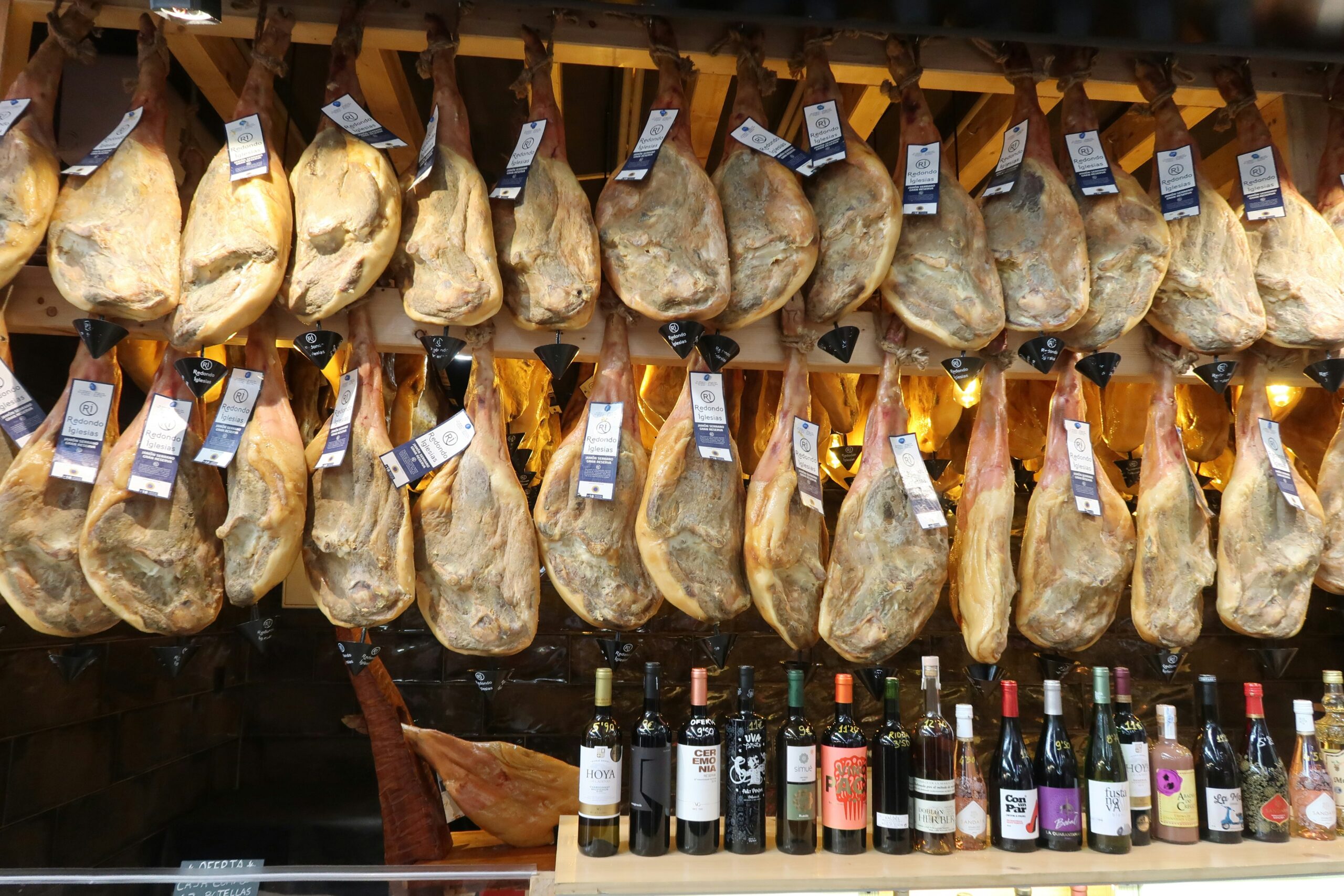
No discussion of Spanish food can avoid jamón ibérico—cured ham from acorn-fed pigs. This ingredient has achieved almost mystical status, with the finest jamón commanding prices exceeding €300 per kilogram.
The obsession is justified. Properly raised, fed, and cured jamón ibérico achieves flavor complexity rivaling the finest cheeses or wines. The production process—pigs roaming oak forests eating fallen acorns, traditional curing methods, aging for up to four years—connects to landscape, climate, and tradition.
But jamón also raises uncomfortable questions about sustainability and equity. The finest jamón is becoming luxury good accessible only to wealthy consumers and tourists. Traditional production methods don’t scale efficiently, creating tension between preservation and accessibility.
Some producers are exploring middle paths—slightly shorter aging, less exclusive pig genetics, more efficient distribution—that maintain quality while expanding access. Whether jamón can remain both traditional and democratic remains uncertain.
Wine: Beyond Rioja
Spanish wine has long been undervalued internationally, overshadowed by French and Italian prestige. This is changing as Spanish wine regions assert distinct identities and younger winemakers experiment with indigenous grape varieties and innovative techniques.
La Rioja remains best known internationally, producing Tempranillo-based wines ranging from affordable everyday drinking to age-worthy gran reservas. But the region is diversifying, with younger winemakers challenging traditional oak-heavy styles.
Ribera del Duero has emerged as Rioja’s rival, producing powerful, structured reds from high-altitude vineyards. Vega Sicilia remains the icon, but numerous excellent producers offer compelling alternatives.
Priorat in Catalonia produces intense, mineral-driven wines from steep slate vineyards. Small production and global demand have driven prices upward, creating a wine region rivaling Burgundy in prestige and cost.
Rías Baixas in Galicia specializes in Albariño, a crisp white wine perfect with seafood. International recognition has expanded, with Albariño appearing on wine lists worldwide.
Sherry from Jerez de la Frontera represents one of wine’s most distinctive and underappreciated categories. Styles range from bone-dry Fino to syrupy-sweet Pedro Ximénez, all created through unique solera aging systems. Sherry’s versatility—aperitif, table wine, dessert wine, cooking ingredient—deserves more recognition.
Spanish winemaking is experiencing generational change. Younger winemakers educated internationally return with new ideas while respecting tradition. They’re experimenting with organic and biodynamic viticulture, indigenous yeasts, minimal intervention, and amphora aging. The results are wines with distinct character that showcase Spain’s diverse terroirs.
Sustainability and Spanish Gastronomy
Spanish food culture’s traditional practices align naturally with contemporary sustainability principles. Seasonal eating, local sourcing, nose-to-tail butchery, preserving and pickling—these weren’t environmental choices but practical necessities that happen to be sustainable.
The challenge is maintaining these practices as industrial food systems offer convenience and cost advantages. Supermarket produce shipped from across Europe or beyond competes with seasonal, local alternatives. Industrial meat is cheaper than traditionally raised livestock. Convenience foods save time for dual-income families.
Yet Spanish gastronomy is resisting homogenization more successfully than many food cultures. Several factors support this:
Geographic diversity means Spain produces remarkable ingredient variety domestically. Unlike northern European countries dependent on imports, Spain can maintain local sourcing across seasons.
Cultural attachment to specific foods, preparations, and eating rituals creates consumer demand for traditional products. Spaniards will pay more for authentic jamón, proper manchego cheese, or traditional olive oil.
Restaurant commitment to quality ingredients creates market for small producers. When top restaurants showcase local producers, it validates traditional methods and creates economic viability.
Government support through agricultural policies, DOP (Protected Designation of Origin) systems, and tourism promotion helps preserve traditional food production.
The Mediterranean diet—recognized by UNESCO as Intangible Cultural Heritage—provides framework for sustainable eating: plant-based foods emphasized, local and seasonal ingredients, moderate portions, minimal processing. Spanish food culture largely embodies these principles, though fast food incursion and changing lifestyles create challenges.
Challenges Facing Spanish Gastronomy
Despite current vitality, Spanish gastronomy faces significant challenges.
Labor shortages affect restaurants across categories. Kitchen work is demanding, poorly paid, and offers irregular hours. Attracting young people into professional cooking requires better compensation and conditions.
Cost pressures squeeze both producers and restaurants. Traditional food production—whether small-scale farming, artisan cheese-making, or craft wine—faces economic challenges competing with industrial alternatives.
Generational transmission of culinary knowledge is uncertain. As extended families fragment and both parents work, traditional cooking knowledge isn’t automatically passed to younger generations.
Fast food incursion introduces convenient but nutritionally poor alternatives, particularly affecting children and adolescents. Obesity rates in Spain, while lower than US levels, are rising.
Climate change threatens ingredient availability. Water scarcity affects agriculture, rising temperatures alter growing regions, and extreme weather impacts harvests. Spanish gastronomy depends on specific ingredients from particular places—climate disruption endangers these foundations.
The Future of Spanish Food
Spanish gastronomy’s trajectory seems promising but not guaranteed. Continued success requires active choices: supporting small producers, valuing traditional knowledge, welcoming innovation, resisting homogenization, and maintaining the social dimensions that make Spanish food culture distinctive.
For European food lovers, Spain offers increasingly compelling reasons for gastronomic pilgrimage. The combination of ingredient quality, technical excellence, cultural authenticity, and pure pleasure rivals anywhere globally.
Spain’s gastronomic revolution isn’t about abandoning tradition for novelty—it’s about honoring tradition while maintaining vitality. It’s recognizing that living food cultures must evolve or die, that preservation requires adaptation, and that respecting the past doesn’t mean being imprisoned by it.
This approach—reverent yet irreverent, traditional yet innovative, local yet cosmopolitan—might be Spanish gastronomy’s greatest contribution: demonstrating that food culture can honor its past while enthusiastically embracing its future.
The result is a food culture that feels genuinely alive—not preserved in amber like museum artifact, not relentlessly chasing novelty like so much contemporary cuisine, but rather evolving organically while maintaining connection to place, tradition, and community.
That’s worth celebrating—preferably with excellent jamón, a glass of Rioja, and good company around a shared table.