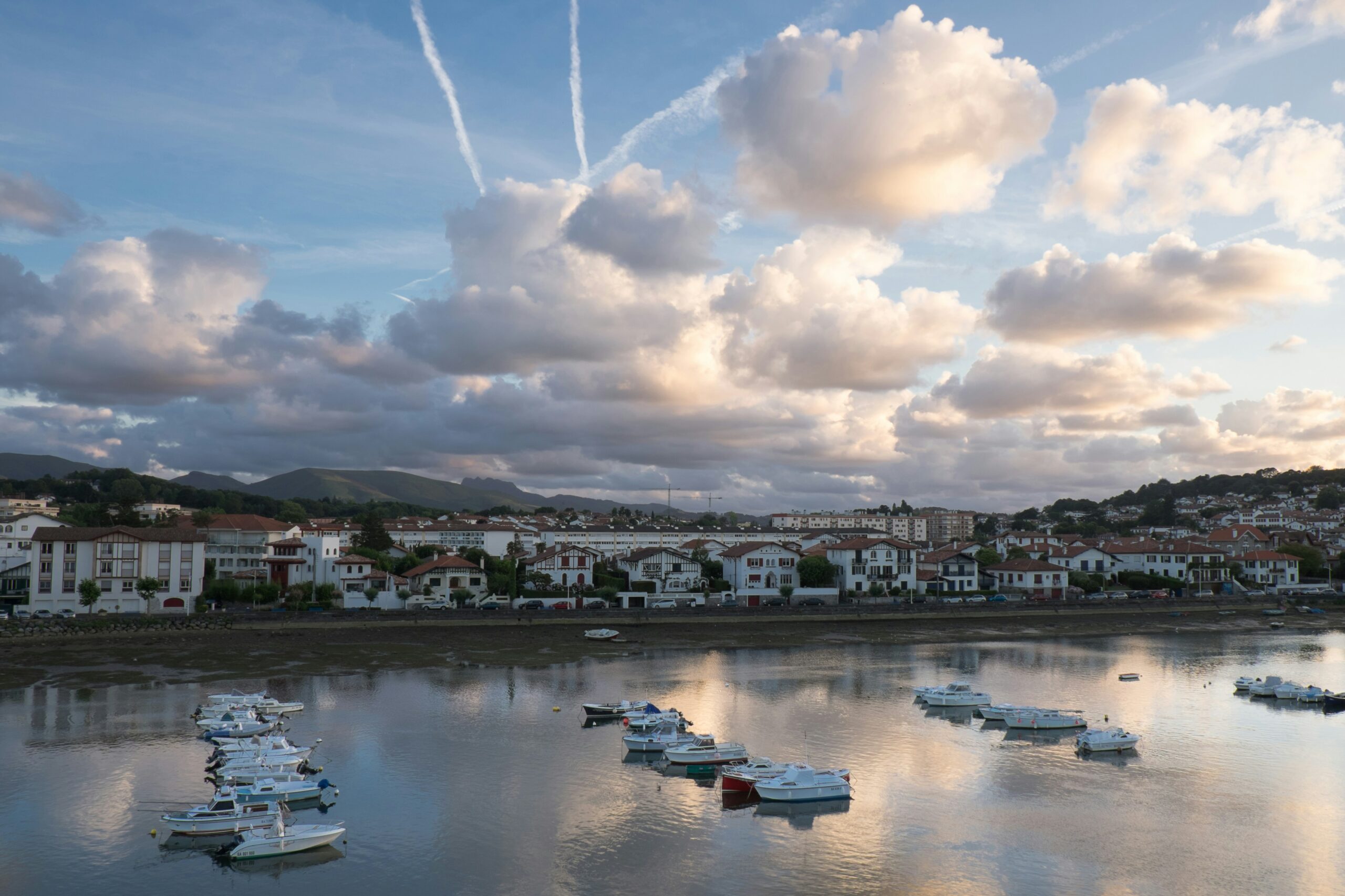
Perched on the Bay of Biscay, San Sebastián (Donostia in Basque) arguably claims the world’s highest concentration of Michelin stars per capita. But this elegant coastal city offers far more than haute cuisine—its crescent beaches, Belle Époque architecture, and distinctive Basque culture create a destination that satisfies body and soul.
La Concha: Europe’s Most Beautiful Beach
San Sebastián’s crown jewel curves along the bay in perfect symmetry. La Concha beach stretches nearly two kilometers, its golden sand shelving gently into calm waters protected by Santa Clara Island. The Promenade, lined with ornate railings and period streetlamps, follows the beach’s curve past grand hotels and restaurants.
This urban beach succeeds because of thoughtful design. The city maintains it impeccably, cleaning sand daily and providing facilities that never intrude on the natural beauty. The water quality earns consistent blue flag status, and the shallow depth makes swimming safe even for children.
La Concha achieves perfect balance between accessibility and elegance. Unlike resort beaches packed with loungers and umbrellas, La Concha maintains open space where locals spread towels and sunbathe. Yet facilities—showers, changing rooms, beach bars—are abundant and well-maintained.
The bay’s natural protection creates unusually calm conditions for Atlantic coast. On summer days, kayakers paddle around Santa Clara Island while paddleboarders glide across glassy water. Winter transforms the beach into a dramatic seascape where waves crash against the promenade and Monte Igueldo and Monte Urgull frame stormy skies.
Sunrise and sunset both reward early risers and evening strollers. Watching dawn break over Santa Clara Island, with Monte Urgull silhouetted against brightening sky, initiates the day beautifully. Sunset paints the bay orange and pink, best viewed from the western end near the Pico del Loro lookout.
Pintxos: The Heart of Basque Gastronomy
San Sebastián’s pintxos culture elevates tapas to art form. These small bites—often architectural constructions held together with toothpicks—showcase creativity, technical skill, and premium ingredients compressed into a few bites. The tradition involves hopping between bars, sampling each establishment’s specialties while standing at the counter, glass of txakoli (slightly sparkling Basque white wine) in hand.
Parte Vieja (Old Town) Pintxos Crawl
The Old Town’s narrow streets house over 100 pintxos bars, creating almost overwhelming choice. Strategy helps: start early (locals begin around 8 PM), pace yourself (one or two pintxos per bar), and follow the crowds (packed bars usually indicate quality).
Bar Nestor achieves legendary status for just two items: tortilla de patatas (potato omelet) served at 1 PM and 8 PM only, and grilled steak. The tortilla, with its runny center and caramelized edges, may be the best in Spain. Arrive 30 minutes early or face disappointment.
La Cuchara de San Telmo pioneered hot pintxos—mini portions of traditional Basque dishes served in small cazuelas (clay pots). The foie with apple compote and the carrillera (braised beef cheek) showcase techniques more associated with fine dining.
Gandarias excels at mushroom preparations—the setas al ajillo (garlic mushrooms) and wild mushroom risotto demonstrate seasonal ingredient quality. The house cider accompanies perfectly.
Txepetxa specializes exclusively in anchovies, offering 14 varieties prepared different ways. The marinated anchovies melting on your tongue reveal how far removed these are from anything emerging from a tin.
A Fuego Negro requires advance booking (or arriving early) for its creative pintxos. The foie pintxo and beef cheek in reduced wine sauce exemplify the chef’s technical ambition.
Borda Berri attracts serious food lovers for pintxos that change daily based on market availability. The stewed oxtail and cod kokotxas (throat) in pil-pil sauce showcase traditional Basque cooking elevated to new heights.
Michelin-Starred Excellence
San Sebastián boasts three restaurants with three Michelin stars—an extraordinary concentration for a city of 186,000 residents.
Arzak has held three stars since 1989, with Juan Mari Arzak and daughter Elena maintaining the restaurant’s position at Spanish gastronomy’s forefront. Their cooking balances innovation with respect for Basque ingredients and traditions. Signature dishes evolve constantly, but expect playful presentations and surprising flavor combinations. Book months ahead.
Akelarre occupies a dramatic clifftop location west of the city. Chef Pedro Subijana creates tasting menus that read like poetry while delivering profound pleasure. The setting, overlooking the Bay of Biscay, adds drama to an already memorable experience.
Martín Berasategui operates outside San Sebastián proper but within easy reach. Berasategui holds more Michelin stars across his various restaurants than any Spanish chef. His eponymous restaurant showcases technical mastery and ingredient purity. Dishes achieve the precision that defines the highest level of gastronomy.
For visitors unable to secure reservations or afford these temples of haute cuisine, several one-star restaurants offer exceptional quality at lower prices. Kokotxa, in the Old Town, creates modern Basque cuisine in a more relaxed atmosphere. Alameda presents refined cooking with harbor views.
Markets and Culinary Culture
La Bretxa Market serves as San Sebastián’s main food market. The ground floor houses a modern supermarket, but climb to the first floor and discover traditional market stalls. Fish vendors display the morning’s catch—whole tuna, delicate hake, percebes (goose barnacles), and seasonal shellfish. Produce stands showcase Basque vegetables, including pimientos de Gernika (sweet green peppers) and massive white beans (pochas).
Shopping here reveals what makes Basque cuisine distinctive: obsessive quality standards. Vendors take pride in sourcing, and customers demand perfection. This mutual appreciation for ingredient quality permeates San Sebastián’s food culture from markets to Michelin restaurants.
Monte Igueldo and Monte Urgull
Two mountains bracket San Sebastián, offering perspectives beyond the beach.
Monte Igueldo rises at La Concha’s western end, accessible by funicular railway dating to 1912. The summit holds a modest amusement park that adds nostalgic charm. But visitors ascend for views—the panorama encompasses the entire bay, the city spread below, and coastline extending in both directions. Sunset from here rivals anywhere in Europe.
Monte Urgull provides more natural experience. Paths wind through forest to the summit where the Sacred Heart statue stands atop Castillo de la Mota. The 12th-century fortress now houses a history museum, but the real reward lies in views across the Old Town, harbor, and out to sea. The walk takes 30-45 minutes at moderate pace.
Island Adventure: Santa Clara
During summer months, boats ferry passengers to Santa Clara Island in the bay’s center. The 15-minute crossing delivers to a small island with picnic facilities, a basic bar-restaurant, and swimming areas. The island offers different perspective on San Sebastián—looking back at the city framed by mountains creates memorable photos.
Pack a picnic or buy simple food at the island’s bar. Swimming from the island’s small beaches or rocky areas feels more adventurous than city beach swimming. The last boat returns around 8 PM in summer—don’t miss it.
Basque Culture and Language
San Sebastián sits in Gipuzkoa province, Basque Country’s heartland. Euskara (Basque language), unrelated to any other language, appears on all street signs and official communications. While Spanish remains widely spoken, learning a few Basque words earns appreciation: kaixo (hello), eskerrik asko (thank you), agur (goodbye).
The Basque identity expresses itself through traditions maintained despite Franco’s suppression attempts. Athletic Club Bilbao’s policy of fielding only Basque players reflects cultural pride. Bertsolaris (improvised verse singers) perform at festivals. Traditional sports like stone lifting, wood chopping, and rural Basque ball (pilota) competitions continue.
Day Trips and Surroundings
San Sebastián serves as excellent base for exploring the Basque coast and countryside.
Getaria (30 minutes west) birthed both Cristóbal Balenciaga and chef Juan Mari Arzak’s father. The fishing village specializes in grilled fish, particularly whole turbot prepared on wood-fired grills. Bodega Elkano claims the best, though several restaurants vie for that title. Walk the harbor, visit the Balenciaga Museum, and understand how this tiny town influenced fashion and cuisine.
Hondarribia guards the French border with medieval walls and a fishing quarter (La Marina) filled with pintxos bars. The old town’s cobbled streets and heraldic houses create postcard perfection. Cross the river to Hendaye in France for international flair.
San Juan de Gaztelugatxe (90 minutes west, technically in Vizcaya province) became famous as Dragonstone in Game of Thrones. The hermitage perched on a rock outcrop connected by a stone bridge delivers dramatic coastal scenery. The 241-step climb rewards with views along the wild Basque coast. Reserve in advance—visitor numbers are controlled.
Inland Villages: Oñati showcases Renaissance architecture and the baroque university. Bergara and Elgoibar reveal traditional Basque town life away from coast. These villages lack tourist infrastructure but offer authentic experiences.
Practical Information
Getting There: San Sebastián Airport handles domestic flights. Biarritz Airport in France (50km away) serves more international destinations. The bus station connects to Bilbao (1.5 hours), Bilbao Airport (1 hour 15 minutes), and other Spanish cities. The train links to Madrid (5.5 hours) and Barcelona (6 hours).
Getting Around: The city is compact and walkable. The Old Town and La Concha area require no transport. Local buses serve outer neighborhoods and beaches. The Amara district, where locals shop and dine, sits 15 minutes walk from the Old Town.
When to Visit: July and August bring warm weather, busy beaches, and the prestigious San Sebastián Film Festival. Spring and autumn offer ideal conditions—pleasant temperatures, fewer crowds, and full restaurant service (some close in winter). Winter sees stormy seas and reduced hours but also solitude and lower prices.
Festival Highlights: International Film Festival (September) attracts stars and cinephiles. Jazz Festival (July) brings world-renowned musicians. Musical Fortnight (August) showcases classical music. Santo Tomás (December 21st) fills the Old Town with festive atmosphere and market stalls.
San Sebastián succeeds by balancing beauty, gastronomy, and livability. It’s simultaneously a world-class culinary destination and a city where residents swim before work and families stroll after dinner. This harmony—between ambition and relaxation, tradition and innovation, urbanity and nature—defines San Sebastián’s particular magic.