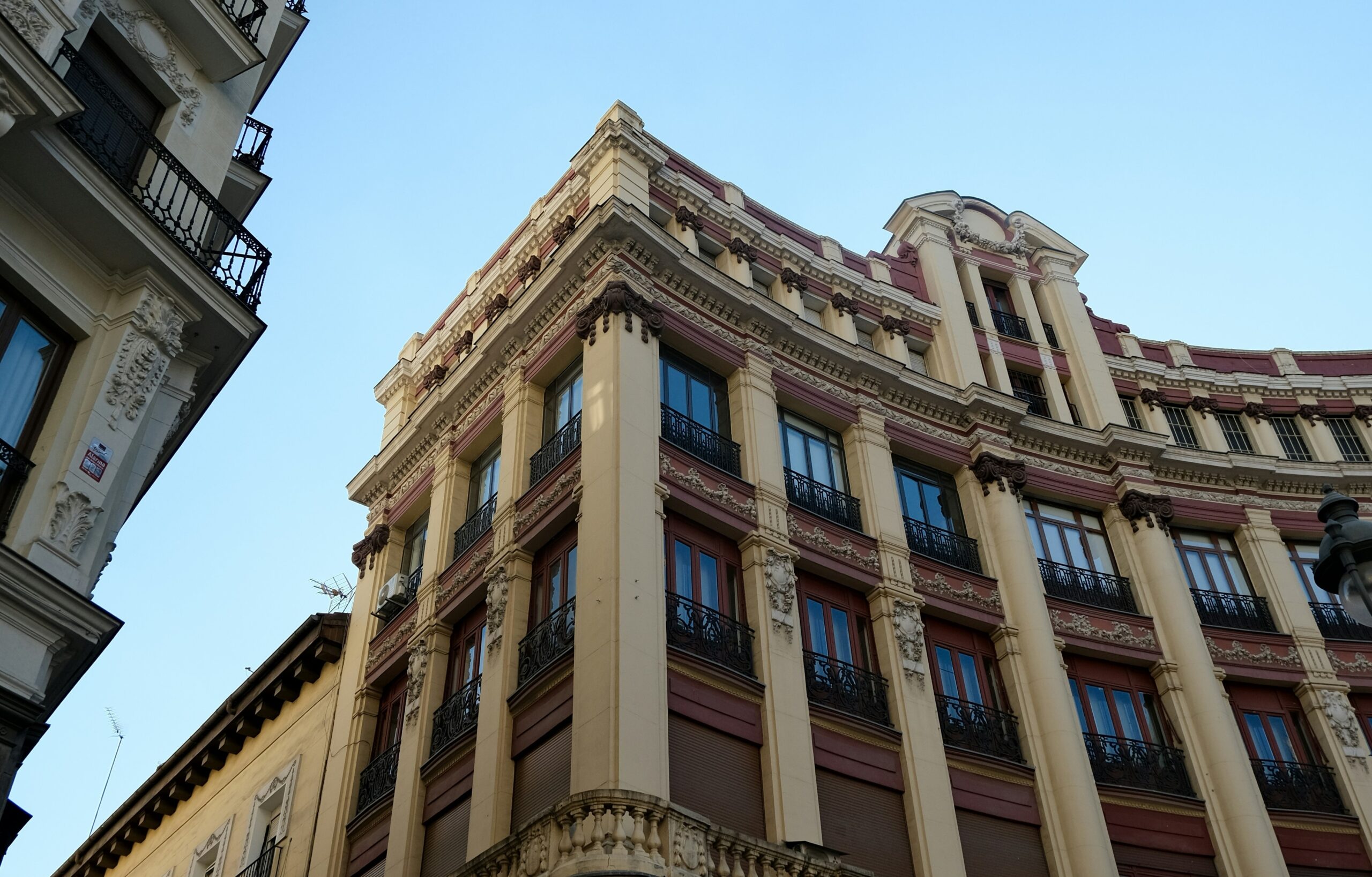
The Design Dilemma
Every property developer and villa buyer in Spain faces the same fundamental question: modern minimalist or traditional Mediterranean?
The answer isn’t aesthetic—it’s economic. Architecture directly impacts resale velocity, rental income potential, and long-term value appreciation. A €1 million modern cube and a €1 million Andalusian-style villa represent dramatically different investment propositions, appealing to different buyers, commanding different rental rates, and appreciating at different speeds.
Understanding which architectural style aligns with your target market, investment timeline, and location is essential for maximizing returns.
Defining the Styles
Traditional Mediterranean Architecture
Characterized by: White or earth-toned facades, terracotta tile roofs, arched doorways and windows, exposed wooden beams, stone or tile flooring, interior courtyards, decorative ironwork, thick walls, small-to-medium windows.
Cultural roots: Moorish influence, Spanish colonial, traditional Andalusian farmhouse (cortijo) aesthetics. Designed for hot climate—thick walls for thermal mass, small windows to limit heat gain, courtyards for natural cooling.
Modern Minimalist Architecture
Characterized by: Clean lines, flat or gently sloped roofs, large glass panels, open-plan interiors, neutral color palettes (white, grey, black), minimal ornamentation, geometric forms, concrete and steel materials, infinity pools integrated with architecture.
Design philosophy: Less is more, form follows function, seamless indoor-outdoor connection, maximizing views and natural light.
Contemporary Mediterranean Fusion
The emerging middle ground: Modern clean lines combined with traditional materials (stone, wood), large windows with traditional shutters, flat roofs with one traditional tile element, white minimalism with arched features. Attempts to capture both markets.
Generational Preferences: Who Buys What
Millennials and Gen X (35-50 years old)
Overwhelming preference for modern architecture. This demographic grew up with IKEA, Apple stores, and contemporary design. They associate traditional architecture with outdated, high-maintenance properties their grandparents owned.
Priorities: Open-plan living, large windows, smart home integration, minimalist aesthetics, Instagram-worthy spaces. They want properties that photograph well for social media.
Rental behavior: When renting luxury properties, this group specifically searches for “modern villa” or “contemporary design.” Traditional properties don’t appear in their search filters.
Baby Boomers (60-75 years old)
Split preference, leaning traditional. Many appreciate the character, warmth, and cultural authenticity of traditional Mediterranean architecture. They value craftsmanship, unique features, and properties that “feel Spanish.”
Priorities: Charm, distinct rooms (vs. open-plan), established gardens, architectural character, sense of permanence and quality.
However: A significant subset of wealthy boomers prefer modern minimalism, particularly those with urban backgrounds or contemporary art collections.
Ultra-High-Net-Worth (Regardless of Age)
Increasingly modern. The global wealthy class tends toward contemporary architecture that transcends local vernacular. Modern design signals international sophistication and wealth. Traditional architecture, unless historically significant (castle, palace, notable estate), reads as quaint rather than prestigious in UHNW circles.
Regional Style Preferences
Costa del Sol: 60% modern, 40% traditional. Marbella heavily favors ultra-modern. Modern villas command 15-20% rental premium.
Costa Blanca: 55% traditional, 45% modern. Conservative Northern European retiree base. Modern villas in premium locations (Altea Hills) outperform in appreciation.
Barcelona: 70% modern, 30% traditional. Urban, cosmopolitan buyers strongly prefer contemporary design.
Balearics: 65% modern, 35% traditional. International UHNW buyers drive modern preference. Restored traditional fincas command premiums in niche submarkets.
Interior Spain: 70% traditional, 30% modern. Rural authenticity buyers prefer restored cortijos.
Investment Performance Analysis
Resale Velocity (Time on Market)
Modern villas (Costa del Sol): Average 4-6 months Traditional villas (Costa del Sol): Average 7-10 months
Modern design photographs better, appeals to wider demographic, and benefits from digital marketing. Traditional properties require buyers to visit and experience character in person—limiting market reach.
Capital Appreciation (10-Year Trends)
Modern architecture: 85-110% appreciation in prime markets Traditional architecture: 65-85% appreciation Fusion/Contemporary Mediterranean: 70-90% appreciation
Modern consistently outperforms, particularly in areas with international buyer base. Traditional holds value but appreciates slower except in cases of exceptional historic properties or prime established neighborhoods.
Rental Performance
Short-term rental (weekly rates, comparable properties):
- Modern: €3,500-€5,000/week
- Traditional: €2,800-€4,000/week
- Premium: 15-25% for modern
Occupancy rates:
- Modern: 22-26 weeks annually
- Traditional: 18-22 weeks annually
Annual gross rental income difference on comparable €800,000 properties: €12,000-€18,000 favoring modern architecture.
Maintenance Costs
Traditional architecture: 2.5-3.5% of property value annually
- Terracotta roof maintenance every 10-15 years (€15,000-€30,000)
- Wooden beam treatment and repair
- Decorative ironwork maintenance
- Higher painting costs (textured facades, detail work)
Modern architecture: 1.5-2.5% of property value annually
- Flat roof waterproofing every 15-20 years (€8,000-€15,000)
- Large glass panel maintenance
- Simpler, more economical maintenance overall
Over 20 years, traditional architecture costs €40,000-€80,000 more to maintain on typical €800,000 property.
Construction and Maintenance Costs
New Construction Per m²:
- Traditional: €1,500-€2,000/m² (complex details, traditional materials)
- Modern: €1,600-€2,100/m² (engineering complexity offset by simpler finishes)
Modern costs 5-10% more upfront but significantly less long-term.
Annual Maintenance:
- Traditional: 2.5-3.5% of property value (roof maintenance, woodwork, ornate details)
- Modern: 1.5-2.5% of property value (simpler systems, easier maintenance)
Over 20 years: Traditional costs €40,000-€80,000 more on typical €800,000 property.
Timeless vs. Trendy
Modern risks dating as trends evolve (1990s “modern” now outdated). Traditional, when well-executed, remains timeless. However, poorly executed traditional dates worse than clean modern.
Modern allows easier renovation—open plans and minimal structural walls facilitate updates. Traditional locks in specific aesthetics; removing character elements destroys value.
Location Appropriateness
When Traditional Makes Sense
- Established neighborhoods with architectural continuity (El Rosario in Marbella, old town Altea)
- Rural properties where modern feels incongruous
- Historic centers with architectural regulations
- Properties targeting European retirees specifically
- Buyers prioritizing authenticity and cultural immersion
When Modern Makes Sense
- New developments without established architectural character
- Properties targeting international or younger buyers
- Rental investment focus (higher yields justify choice)
- Hillside plots where modern design maximizes views
- Ultra-luxury segment (€2M+) where modern dominates
When Fusion Works
- Properties bridging multiple buyer demographics
- Areas without strong architectural tradition
- Buyers seeking both modern functionality and some local character
- Properties where pure modern might feel too stark
The Investment Decision Framework
Choose Modern If:
- Maximizing rental income is priority (15-25% premium achievable)
- Targeting buyers under 50 years old
- Planning to sell within 5-10 years (faster resale)
- Operating in competitive international markets
- Want lower long-term maintenance costs
- Property will be photographed extensively for marketing
Choose Traditional If:
- You personally prefer the aesthetic (if holding long-term, this matters)
- Location has strong traditional architectural context
- Targeting European retiree demographic specifically
- Historic or rural property where modern feels inappropriate
- Exceptional traditional features exist (original elements worth preserving)
- You’re betting on “authentic Spanish” becoming more valuable as modern saturates
Choose Fusion If:
- You’re uncertain about target market
- Want to hedge between buyer preferences
- Local market shows no clear preference
- Budget constraints (some modern benefits without full modern cost)
Future Trends
Both styles evolving toward sustainability. Traditional inherently passive (thick walls, small windows); modern adding solar and insulation. Future winners will be sustainable regardless of aesthetic.
As mass-market modern proliferates, exceptional traditional properties with authentic historic features may see renewed appreciation—but only genuinely historic properties, not 1990s traditional-style construction.
Digital marketing (Instagram, Pinterest) favors photogenic modern design, strengthening its market advantage.
Conclusion: Strategy Over Style
Architecture isn’t about taste—it’s about market alignment. The “best” style is the one that matches your target buyer, location, and investment objectives.
Modern architecture dominates in investment performance metrics: faster resale, higher rental income, lower maintenance, and broader market appeal. These advantages are substantial and measurable.
Traditional architecture succeeds in specific niches: buyers seeking authenticity, established traditional neighborhoods, rural properties, and certain European demographics.
The investors who profit aren’t those building what they personally prefer—they’re building what their target market will pay premium prices to own or rent.
Know your market, understand the numbers, and let investment returns guide architectural decisions. Personal aesthetic preferences are luxuries afforded after investment fundamentals are satisfied.
In Spanish real estate, architecture is ultimately a financial decision disguised as a design choice.