The Don Quixote parallels are almost too perfect to resist. Across La Mancha’s windswept plateaus, thousands of modern windmills generate clean electricity instead of providing targets for delusional knights. Spain, once Europe’s sleeping giant, has awakened not to impossibly romantic quests but to a hard-headed realization: sustainability isn’t idealism—it’s survival.
As 2025 draws to a close, Spain ranks among Europe’s top sustainable destinations, praised by everyone from the BBC to Lonely Planet for its commitment to renewable energy, green infrastructure, and eco-conscious tourism. Valencia was named 2024’s European Green Capital. The transformation from climate laggard to environmental leader has been swift, comprehensive, and—most remarkably—genuinely popular among Spaniards themselves.
This isn’t greenwashing or government propaganda. Walk through Barcelona’s Eixample district, cycle Valencia’s expanded bike lanes, or visit any new residential development in Madrid, and you’ll witness the tangible reality of Spain’s green transition. The question isn’t whether it’s happening—it’s how Spain managed to move so fast, and what lessons it offers for the rest of Europe.
The Numbers Tell the Story
Spain’s Sustainable Development Goals (SDG) performance index reached 91.4 in 2024, one of the highest scores in Europe. This isn’t a single metric but a comprehensive assessment across 17 SDG categories, from clean energy to sustainable cities to climate action.
The energy statistics are particularly striking. Spain now ranks fourth globally in wind power production, with those La Mancha windmills contributing significantly to a national grid increasingly powered by renewables. Solar capacity has expanded dramatically, with new installations adding capacity equivalent to several nuclear plants over just the past three years.
By 2025, renewable energy accounts for over 52% of Spain’s electricity generation. The government’s goal is 74% renewable by 2030—ambitious but increasingly achievable. Coal plants have systematically closed, with the last scheduled to shut down by 2027. Natural gas serves primarily as backup for when renewable generation dips.
This transition has been remarkably smooth compared to Germany’s Energiewende struggles or France’s nuclear-dependent paralysis. The secret? Spain’s geographic advantages—abundant sunshine, strong winds, significant coastline for tidal power—combined with political commitment from both major parties. Climate action in Spain isn’t partisan warfare; it’s consensus policy.
The Sustainable Tourism Strategy 2030
Tourism, Spain’s economic engine, has embraced sustainability out of necessity. The Sustainable Tourism Strategy 2030 isn’t aspirational—it’s operational policy reshaping how Spain welcomes 100 million annual visitors.
The goals are specific and measurable: cut tourism-related carbon emissions by 40%, shift half of all resorts to renewable energy, and implement circular economy principles throughout the hospitality sector. These aren’t distant 2050 pledges—they’re 2030 commitments with annual benchmarks and accountability mechanisms.
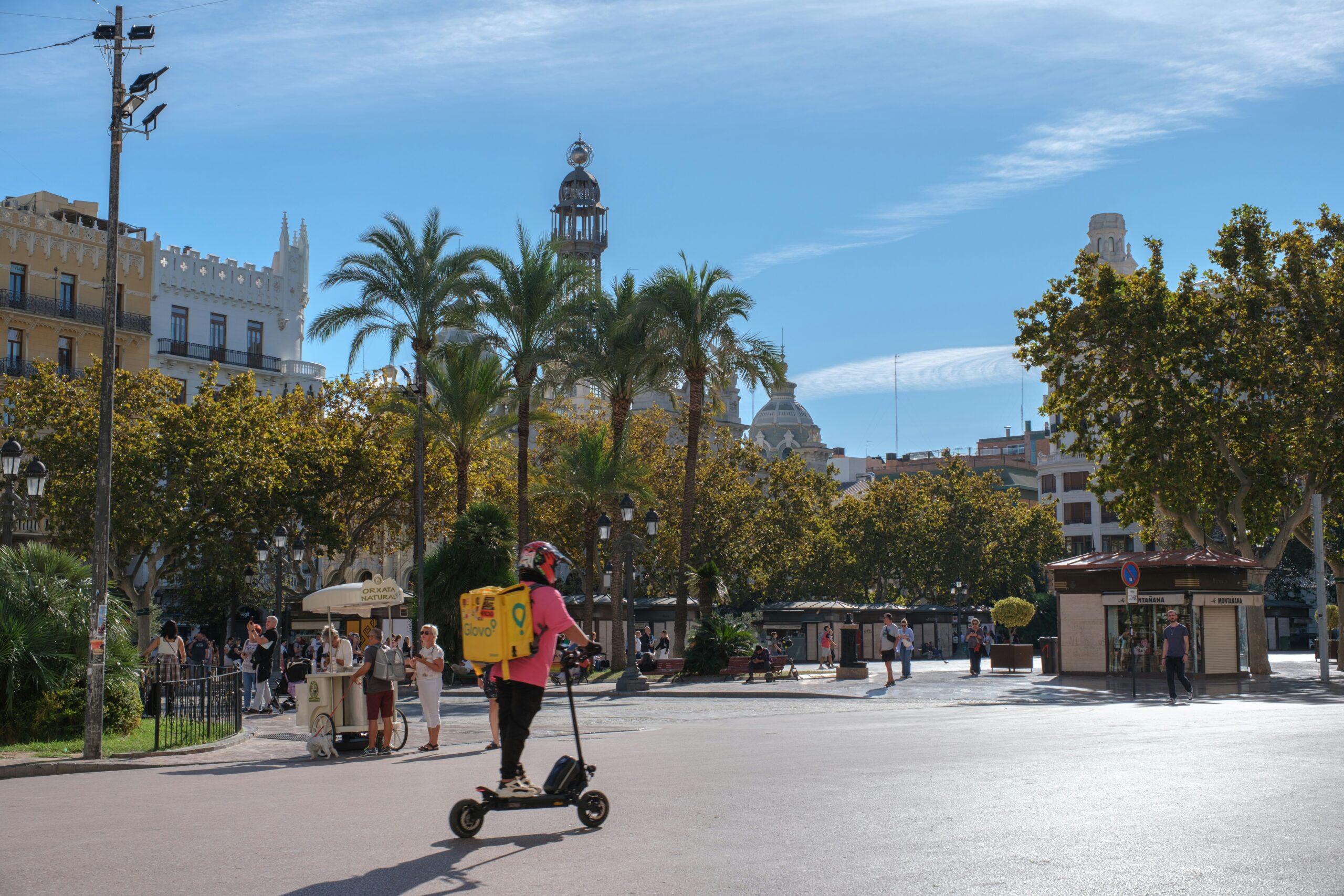
Progress is visible across the country. Valencia’s approach is exemplary: public buildings powered by solar, electric buses replacing diesel, pedestrianized streets reducing urban heat islands, and smart sensors monitoring everything from air quality to waste bin capacity. The city earned its European Green Capital designation through comprehensive transformation, not isolated pilot projects.
Barcelona has committed to phasing out tourist apartments in saturated neighborhoods while simultaneously improving energy efficiency in remaining accommodation. New regulations require hotels to meet strict sustainability criteria—solar panels, water recycling, waste reduction, local food sourcing. Non-compliant establishments face escalating fines.
The Balearic Islands, tourist jewels threatened by overtourism, have implemented some of Europe’s most progressive environmental policies. Single-use plastics are banned. Tourist taxes fund environmental restoration. Marine protected areas are expanding. Ibiza, once synonymous with excess, is rebranding around ecological luxury.
Cities Leading the Transition
Spanish cities are laboratories for sustainable urban living, each taking distinct approaches shaped by local geography, culture, and political priorities.
Valencia leverages its Green Capital status to position itself globally. The city’s comprehensive approach includes renewable energy infrastructure, massive expansion of cycling infrastructure (now over 200 kilometers of protected bike lanes), urban gardens providing local produce, and digital systems managing resources efficiently. The Mediterranean climate that once drove energy-intensive air conditioning now powers solar panels feeding into a smart grid.
Barcelona pursues what it calls “superblocks”—nine-block areas where vehicle traffic is restricted to perimeter streets, freeing interior spaces for pedestrians, cyclists, and community use. Air pollution has decreased measurably in superblock areas, while property values have increased. The model is expanding citywide despite initial resistance from some residents and businesses.
Madrid focuses on green space expansion. The Madrid 360 environmental sustainability strategy includes the Centro Canalejas forest—a green corridor penetrating the city center—and systematic tree planting that’s added over 100,000 trees in three years. Air quality monitors now show significant improvement in central districts.
Seville exemplifies solar integration, with photovoltaic installations on public buildings generating substantial electricity. The city’s Climate Action Plan includes ambitious goals: carbon neutral by 2040, zero waste by 2035, and 100% renewable energy by 2030.
The Sustainable Built Environment
Spain’s green transition is literally being built into new construction. Energy Performance Certificates (EPC), mandatory for all properties, drive market transformation. Buildings rated A or B command premium prices and rent faster. Those rated F or G—energy inefficient—struggle to find buyers or tenants.
This market pressure drives renovation of Spain’s older housing stock. Government subsidies, available through the Next Generation EU fund, support energy efficiency improvements: insulation, double-glazed windows, heat pumps replacing old boilers, solar panel installation.
New construction must meet stringent standards. Developments incorporate passive design principles—building orientation, natural ventilation, thermal mass—that reduce energy needs before adding technology. Green roofs, rainwater harvesting, greywater recycling, and electric vehicle charging infrastructure are increasingly standard rather than luxury features.
The Modern Eco Village near Planes represents the ambitious end of this spectrum: 700 units designed around sustainability from inception. Renewable energy, organic farms, shared resources, community-focused planning—it’s attempting to demonstrate that ecological living needn’t mean sacrifice or discomfort.
Architects and developers report shifting client expectations. Buyers—particularly younger ones and international buyers from northern Europe—actively seek sustainable features. Green certification from programs like LEED or BREEAM has moved from niche to mainstream.
Transportation Transformation
Spain’s high-speed rail network (AVE) is Europe’s most extensive, connecting cities across the peninsula at speeds exceeding 300 kilometers per hour. This isn’t just about convenience—it’s climate policy. A Madrid-Barcelona flight emits approximately 100 kg of CO2 per passenger. The AVE train emits about 10 kg. The time difference is negligible, the comfort superior, and the price competitive.
Rail has captured market share from airlines on routes where high-speed service exists. The Madrid-Seville corridor sees over 90% of travelers choosing trains over planes. As the AVE network expands—connections to France already exist, Portuguese routes are improving—it becomes Europe’s model for how rail can genuinely replace short-haul flights.
Urban transportation is also transforming. Madrid and Barcelona have expanded metro networks, added electric buses, and created extensive bike infrastructure. Barcelona’s Bicing public bike-share system has over 10,000 bikes at 600 stations. Usage surged during the pandemic and hasn’t retreated—cycling has become normalized as daily transportation, not just recreation.
Electric vehicle adoption in Spain lags somewhat behind northern European countries but is accelerating. Government incentives, expanding charging infrastructure, and falling vehicle prices are driving adoption. Spanish cities are installing public chargers aggressively, often powered by renewable sources.
The Slow Food Movement and Sustainable Agriculture
Spain’s food culture has always emphasized local, seasonal, traditional—values that align naturally with sustainability. The slow food movement has found particularly fertile ground in Spain, where meals are social rituals rather than functional refueling.
Markets like Madrid’s Mercado de San Miguel and Barcelona’s La Boqueria have evolved beyond tourist attractions to become models of local food systems. Zero-waste initiatives, partnerships with local producers, and elimination of single-use packaging demonstrate that large-scale food retail can operate sustainably.
Agriculture, historically water-intensive in Mediterranean climates, is becoming more sustainable through necessity. Water conservation techniques—drip irrigation, deficit irrigation, moisture sensors—have reduced agricultural water consumption substantially. Between 2000 and 2018, water usage decreased by 1,403 hm³ despite agricultural output increasing.
Spain’s Common Agricultural Policy (CAP) strategic plan allocates 23% of the budget to climate and environment-beneficial practices. Agroecological techniques, carbon farming, and soil carbon sequestration receive direct support. Vegetation cover in woody crops has increased over 100% compared to 2012 levels.
Organic farming acreage continues expanding. Spain now has over 2.4 million hectares of certified organic farmland, the largest absolute area in Europe (though not the highest percentage of total agricultural land). Growing domestic demand combines with strong export markets, particularly in Germany and France.
Challenges and Contradictions
Spain’s green transition isn’t without complications. The country still dumps 56.7% of waste in landfills—below the EU average for recycling and reuse. While recycling infrastructure exists, behavioral change lags. Public education campaigns are intensive, but cultural habits change slowly.
Water remains a critical challenge. Climate change is making Spain drier, yet tourism and agriculture both demand substantial water resources. Desalination plants along the Mediterranean coast help but are energy-intensive. Balancing economic activity with water availability will only intensify as a challenge.
Rural depopulation undermines sustainability in some regions. Young people leave villages for cities, abandoning agricultural land that reverts to scrub, increasing wildfire risk. Traditional land management practices that maintained biodiversity are lost. Some green initiatives inadvertently accelerate this trend by concentrating resources in urban areas.
Economic inequality affects green transitions. Upper-middle-class households can afford electric vehicles, solar panels, and energy-efficient renovations. Working-class families struggle with rising energy costs, aging housing stock, and limited access to green alternatives. Ensuring the green transition is equitable remains an ongoing challenge.
The €3.4 Billion Catalyst
Spain’s green transformation received massive support from the EU’s Next Generation recovery fund, with €3.4 billion specifically allocated to sustainable tourism infrastructure. This isn’t just money—it’s a catalyst accelerating changes that might otherwise take decades.
Funds support diverse projects: green public spaces, eco-mobility systems, smart digital tools balancing tourism with environmental protection, renewable energy installations in hotels and attractions, and water conservation infrastructure.
Málaga and Bilbao are piloting smart sensor systems monitoring visitor flows at heritage sites, allowing dynamic management that prevents overcrowding while maximizing access. Valencia uses renewable energy data to guide urban planning, ensuring new developments integrate seamlessly with sustainability goals.
This investment reflects European recognition that Spain’s success matters beyond Spanish borders. As Europe’s primary tourist destination, Spain’s ability to demonstrate sustainable tourism at massive scale provides lessons for Greece, Italy, France, and every country balancing tourism’s economic benefits against environmental costs.
What the Rest of Europe Can Learn
Spain’s green transition offers several instructive lessons for other European nations.
First, political consensus matters more than political dominance. Spain’s Sustainable Development Goals have survived government changes because both major parties—and most regional governments—support environmental action. This allows long-term planning and investment impossible in politically fractured systems.
Second, leverage natural advantages. Spain’s renewable energy success reflects its geography—abundant sunshine, strong winds, extensive coastline. Other countries should identify their own advantages rather than copying Spain’s specific approach.
Third, integrate sustainability with quality of life. Spanish cities promote green infrastructure not as sacrifice but as improvement—cleaner air, quieter streets, more beautiful public spaces, reduced energy costs. This positive framing builds public support.
Fourth, use market mechanisms alongside regulation. Energy performance certificates create market pressure for efficiency. Carbon pricing makes renewable energy competitive. Sustainability certifications allow businesses to differentiate themselves. These market forces complement and reinforce regulatory requirements.
Finally, invest strategically. The Next Generation EU funds weren’t distributed randomly—they supported projects with multiplier effects, creating infrastructure that enables private action. Public investment in charging stations encourages electric vehicle adoption. Support for hotel renewable energy installations makes sustainable tourism viable.
The Road to 2030 and Beyond
Spain’s 2030 sustainability commitments are ambitious: 74% renewable electricity, 40% reduction in tourism carbon emissions, circular economy implementation across major sectors, enhanced biodiversity protection, and reduced water consumption.
Meeting these goals requires sustained effort and investment. Early progress suggests they’re achievable, but challenges will intensify. Climate change will make Spain hotter and drier, testing water systems and agricultural resilience. Tourism pressure continues growing, requiring ever-more sophisticated management.
The most profound question isn’t technical—it’s philosophical. Can Spain maintain its Mediterranean lifestyle—outdoor living, vibrant street life, lengthy social meals, beach culture—while radically reducing environmental impact? Or does sustainability require fundamental cultural change?
Spain’s bet is that sustainability enhances rather than constrains quality of life. Solar panels don’t diminish architecture’s beauty—they integrate with it. Electric vehicles don’t reduce mobility—they improve air quality. Protected natural areas don’t prevent tourism—they make it more valuable by preserving what makes Spain special.
If Spain succeeds, it will demonstrate that European quality of life and planetary sustainability aren’t opposites but complements. That legacy would far exceed even the most ambitious renewable energy targets.
For now, the evidence suggests Spain has committed seriously to green transition. From Galicia’s windswept coast to Andalusia’s sun-baked plains, from Barcelona’s superblocks to Valencia’s Green Capital innovations, change is tangible, measurable, and accelerating.
The Don Quixote parallels come full circle: what once seemed quixotic—powering an industrial nation with wind and sun—has become practical reality. The impossible dream is becoming Spain’s lived experience. And Europe is watching closely, learning from Spain’s successes and struggling with its challenges, understanding that Spain’s green revolution matters for all of us.