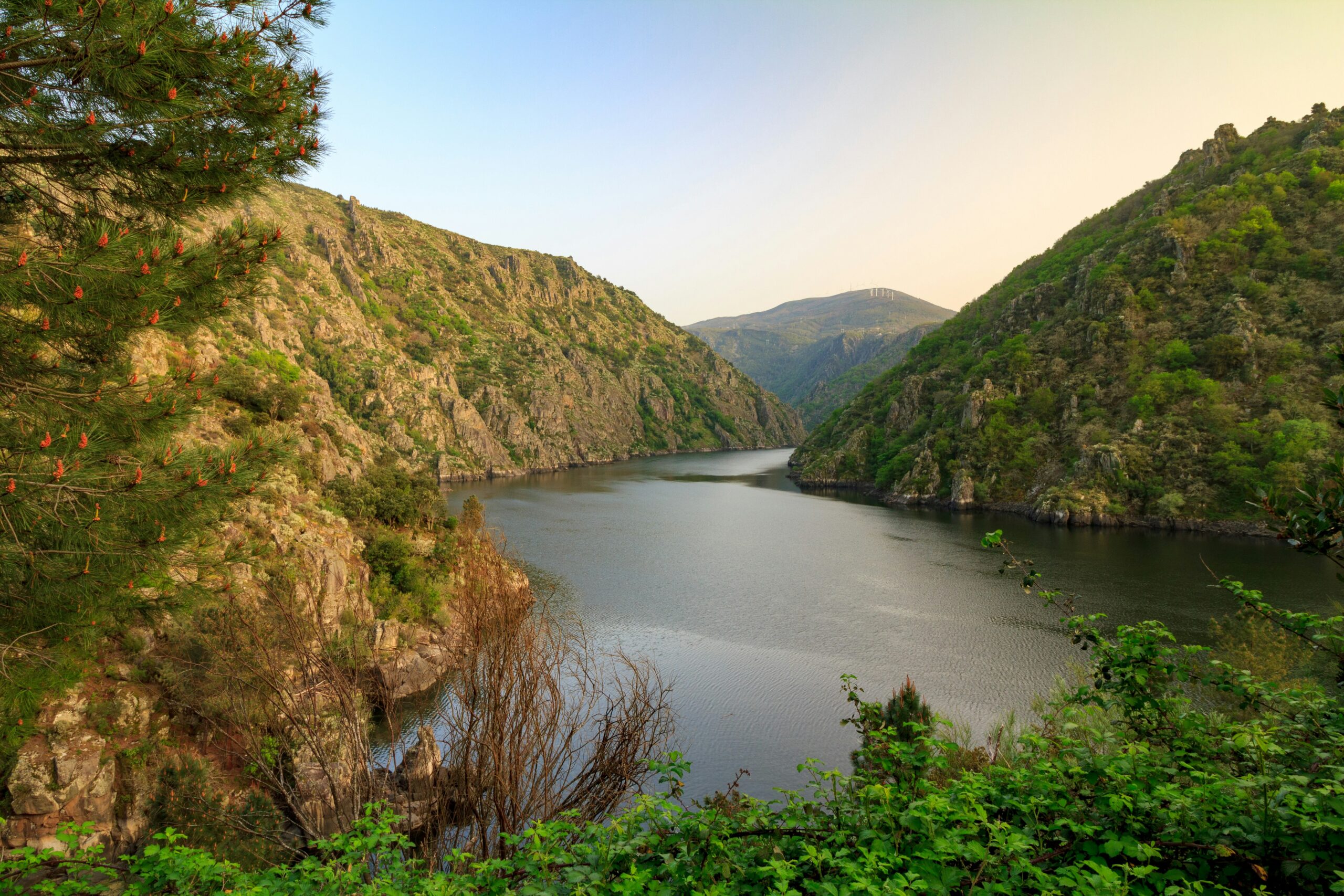
While most visitors to Spain chase Mediterranean sunshine, those who venture to the northwest discover a different country entirely. Galicia, with its emerald landscapes, Celtic heritage, and dramatic Atlantic coastline, offers a Spain few tourists expect—lush, mysterious, and profoundly beautiful.
A Land Apart
Galicia occupies Spain’s northwestern corner, bordered by Portugal to the south and the Atlantic Ocean to the west and north. The Gulf Stream’s influence creates a maritime climate markedly different from the rest of Spain—think Ireland or Brittany rather than Málaga. Rain falls frequently, nourishing forests and maintaining the region’s legendary greenness even through summer.
This climate has shaped Galician culture distinctly. The region’s language, Galego, shares closer ties with Portuguese than Castilian Spanish. Celtic influences persist in musical traditions featuring bagpipes (gaitas) and in folklore rich with legends of witches, treasure-guarding mouros, and enchanted forests.
The Rías: Galicia’s Fjord-Like Coastline
Galicia’s coast is defined by rías—long, narrow inlets where river valleys were flooded by rising sea levels. These create a dramatically indented shoreline of sheltered bays, hidden beaches, and fishing villages that seem unchanged by time.
Rías Baixas (Lower Rías) in southern Galicia are famous for Albariño wine production and pristine beaches. The Cíes Islands, accessible by ferry from Vigo, feature beaches that routinely appear on “world’s best” lists. The archipelago forms part of the Atlantic Islands of Galicia National Park, with protected marine ecosystems and hiking trails offering spectacular ocean views.
Rías Altas (Upper Rías) along the northern coast present wilder character. The Costa da Morte (Coast of Death), so named for its history of shipwrecks, delivers raw Atlantic power. Here, waves crash against granite cliffs, lighthouses stand sentinel over storm-tossed seas, and small fishing villages maintain ancient traditions.
Santiago de Compostela: Journey’s End
The Cathedral of Santiago de Compostela marks the culmination of the Camino de Santiago, one of Christianity’s most important pilgrimage routes. Pilgrims have walked here for over a thousand years, creating a living tradition that continues to draw hundreds of thousands annually.
The cathedral itself is a masterpiece of Romanesque architecture, its Baroque façade added in the 18th century. The alleged tomb of Saint James lies beneath the altar, and attending the Pilgrim’s Mass—where pilgrims from around the world gather, often in tears after weeks of walking—provides a profoundly moving experience regardless of one’s religious beliefs.
But Santiago offers much beyond pilgrimage. Its old town, a UNESCO World Heritage site, encompasses medieval streets, historic monasteries, and the oldest hotel in the world (Hostal dos Reis Católicos, now a parador). The city’s universities bring vibrant youth culture, excellent restaurants, and lively bars where students and pilgrims mingle over Galician wine.
Coastal Villages Worth Discovering
Combarro preserves one of Galicia’s best-preserved collections of hórreos—raised granaries built on stone stilts to protect harvests from rodents and humidity. The village’s waterfront location, with hórreos lining the shore, creates an iconic Galician scene.
Cedeira offers authentic fishing village life on the Rías Altas. Its shellfish are legendary, with percebes (goose barnacles) harvested from dangerous rocks by specialist gatherers commanding premium prices. The surrounding cliffs and beaches provide excellent hiking.
A Guarda sits at Galicia’s southern tip, where the Miño River meets the Atlantic. The town is famous for its lobster festival, but year-round attractions include Castro de Santa Trega, a Celtic hillfort settlement with circular stone foundations and sweeping views across to Portugal.
Culinary Excellence
Galicia claims some of Spain’s finest seafood. The cold Atlantic waters produce exceptional quality, and Galicians prepare it simply to showcase natural flavors. Pulpo a feira (octopus with paprika and olive oil) is the regional signature dish, traditionally served on wooden plates at village festivals.
Other specialties include percebes, navajas (razor clams), zamburiñas (queen scallops), and centolla (spider crab). The region’s beef, particularly from the Rubia Gallega breed, rivals any in Europe. Empanada gallega—savory pies filled with fish, meat, or vegetables—makes perfect picnic food for coastal walks.
Albariño wine from the Rías Baixas perfectly complements seafood with its crisp acidity and mineral notes. Lesser-known but equally impressive are Ribeiro wines and the region’s aguardiente (grape brandy), often infused with herbs to create traditional queimada served ceremonially in clay bowls.
Walking the Camino Inglés
While the Camino Francés from France dominates pilgrim consciousness, Galicia hosts several alternative routes. The Camino Inglés from Ferrol or A Coruña follows paths used by British pilgrims arriving by sea. At 120 kilometers, it’s the shortest route qualifying pilgrims for a Compostela certificate, making it perfect for those with limited time.
The coastal sections pass spectacular beaches and clifftop paths, while inland stretches wind through eucalyptus forests and traditional villages. Unlike the busier French route, the English Way offers solitude and authentic cultural encounters.
The Magic of Galician Light
Photographers treasure Galicia for its distinctive light—softer and more diffuse than elsewhere in Spain, filtered through frequent cloud cover and moisture-laden air. This quality illuminates the landscape with an almost ethereal glow, particularly during the “golden hour” around dawn and dusk.
The changing weather creates constant drama. One moment brings rain sweeping in from the Atlantic; the next, sunshine breaks through, illuminating wet stones and vegetation with jewel-like intensity. Learning to appreciate this variability rather than waiting for constant sun reveals Galicia’s true beauty.
Practical Information
Getting There: Santiago de Compostela and A Coruña have airports with connections to Madrid, Barcelona, and some European cities. Alternatively, fly to Porto in Portugal and drive north. The AVE high-speed train now connects Madrid to both A Coruña and Santiago in under 5 hours.
Best Time to Visit: May through October offers the most reliable weather, though rain is possible year-round. July and August bring warmest temperatures and most tourists. Spring displays wildflowers, while autumn harvest season showcases culinary traditions.
What to Pack: Waterproof jacket and layers are essential regardless of season. Comfortable walking shoes handle cobblestones and coastal paths. The weather can change quickly—be prepared for four seasons in one day.
Galicia rewards travelers seeking authenticity over sun-soaked clichés. Here, Spain’s Celtic soul persists in a landscape of profound natural beauty, where tradition and modernity coexist in surprising harmony.