Barcelona captivates with Gaudí’s architecture and Mediterranean energy, but venture beyond the Catalan capital and discover a region of extraordinary diversity. From medieval villages frozen in time to volcanic landscapes and hidden coastal coves, Catalonia offers weeks of exploration for travelers willing to leave the city behind.
The Medieval Heart: Girona
Just 40 minutes from Barcelona by train, Girona feels worlds away. Its medieval quarter—one of Spain’s best-preserved—rises above the Onyar River, where colorful houses seem to grow directly from the water. The city’s Jewish quarter, El Call, comprises a labyrinth of stone passages so narrow that two people can barely pass side by side. This neighborhood, one of Europe’s most important medieval Jewish communities, now houses a museum documenting centuries of Sephardic life.
Girona’s cathedral dominates the skyline with the widest Gothic nave in the world. Climbing the baroque steps leading to its entrance, made famous by Game of Thrones, provides views across terracotta roofs toward distant mountains. The cathedral’s treasury contains the exceptional Tapestry of Creation, an 11th-century Romanesque masterpiece.
But Girona excels beyond monuments. Its culinary scene rivals Barcelona’s, with El Celler de Can Roca (repeatedly ranked among the world’s best restaurants) leading an ecosystem of innovative dining. More accessible options abound in the Barri Vell, where traditional Catalan cuisine meets contemporary creativity.
Costa Brava: Beyond the Crowds
The Costa Brava (Wild Coast) stretches from Blanes to the French border, its rocky shoreline punctuated by pine-covered cliffs and hidden coves. While some sections succumbed to development, much remains gloriously unspoiled.
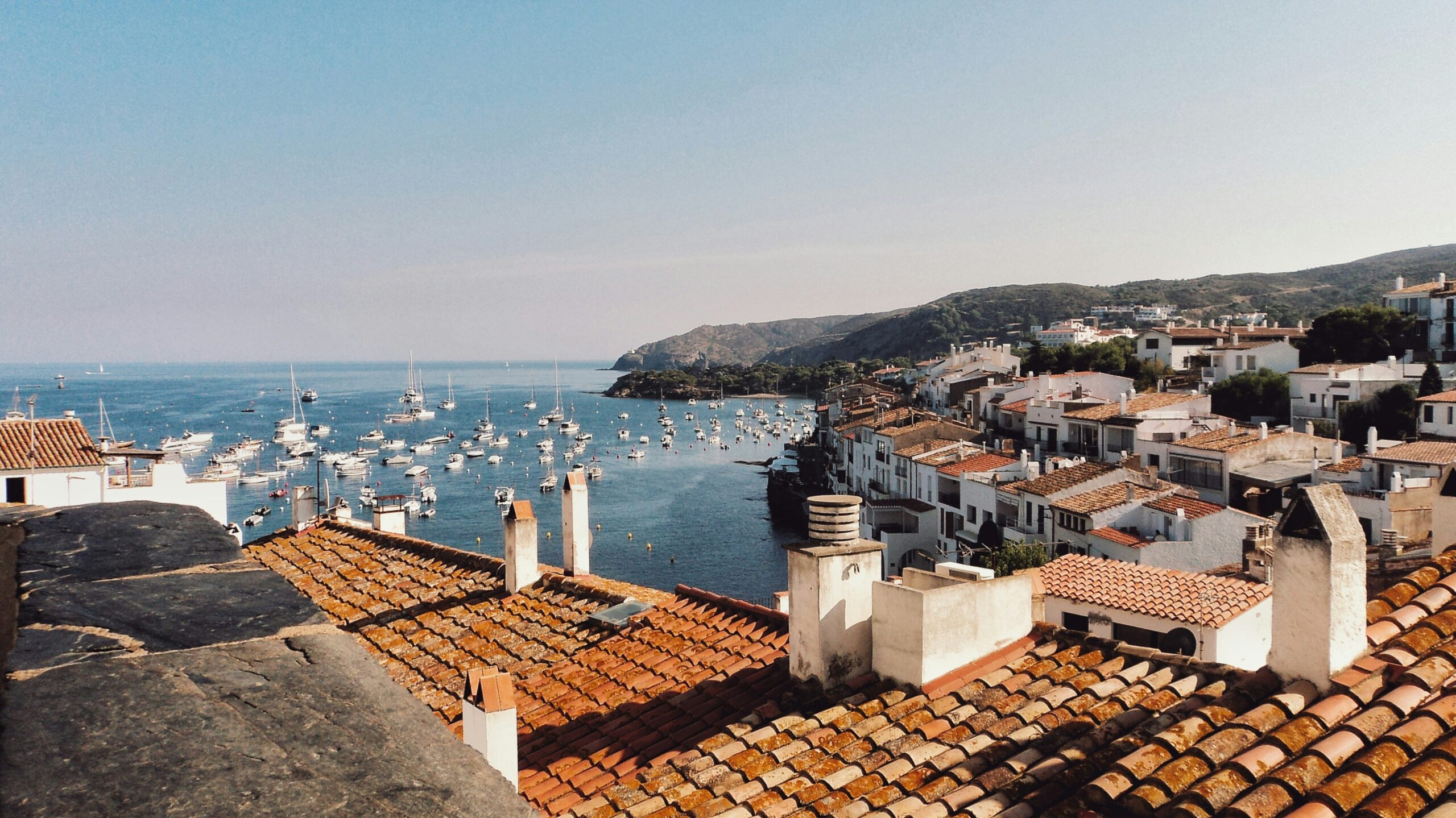
Cadaqués captures the essence of Costa Brava charm. This whitewashed fishing village, accessible only via winding mountain roads, attracted Salvador Dalí, who maintained a house-studio in nearby Port Lligat (now an excellent museum). The town’s isolation preserved its character—narrow streets climb from a bay where fishing boats still dock, and restaurants serve exceptional seafood with minimal fuss.
Calella de Palafrugell and its neighboring coves (Llafranc and Tamariu) represent the Costa Brava at its most picturesque. Traditional fishing shacks (barraques) converted into restaurants line the waterfront, serving suquet (fish stew) and grilled seafood. The coastal path connecting these villages provides spectacular walking with frequent opportunities to descend to hidden beaches.
Tossa de Mar combines castle-crowned headland with sandy beach. The Vila Vella (Old Town) occupies medieval walls overlooking the Mediterranean, while the beach curved bay attracted artists in the early 20th century, including Marc Chagall. Today it offers excellent swimming and a more relaxed atmosphere than busier resorts.
Volcanic Landscapes: La Garrotxa
Inland from the coast, La Garrotxa Natural Park preserves over 40 volcanic cones and lava flows—one of Europe’s best-preserved volcanic landscapes. Don’t expect Icelandic drama; these volcanoes last erupted 11,000 years ago and now host beech forests of remarkable beauty.
The park’s most striking feature is the Fageda d’en Jordà, a beech forest growing on lava flow. Walking beneath these trees, with their smooth grey trunks and light-filtering canopy, creates an almost mystical atmosphere. The area offers dozens of hiking trails, from easy strolls to challenging climbs up volcanic cones like Croscat, where you can peer into the crater.
Besalú guards the region’s entrance with its magnificent Romanesque bridge spanning the Fluvià River. This medieval gem preserves a Jewish ritual bath (mikveh) from the 12th century, one of only three surviving in Spain. The town’s narrow streets and stone buildings appear virtually unchanged since medieval times.
Olot, the area’s main town, serves as base for exploring the volcanic zone. Its modernist architecture and Tuesday market provide authentic Catalan life away from tourist centers.
Mountain Monasteries and Medieval Villages
The Pyrenees foothills shelter some of Catalonia’s most enchanting medieval villages and monasteries.
Sant Joan de les Abadesses features a 12th-century monastery with a stunning Romanesque descent from the cross sculpture. The Gothic bridge spanning the Ter River and the village’s medieval atmosphere justify the detour.
Rupit seems impossibly picturesque, with stone houses perched on cliffs above a gorge. Narrow streets paved with river stones lead between buildings showing centuries of weather. A suspension footbridge crosses the stream, and nearby waterfalls reward short hikes.
Santa Pau circles a small hilltop, its portal medieval gate the only entrance. The arcaded square and castle maintain medieval character so complete that few vehicles enter. The surrounding area produces excellent white beans (fesols de Santa Pau), a protected designation of origin product.
Montserrat: Sacred Mountain
Catalonia’s spiritual heart rises dramatically from the plains northwest of Barcelona. Montserrat’s serrated ridges host a Benedictine monastery that has housed the Black Madonna—La Moreneta—since the 12th century. The statue attracts pilgrims and tourists alike, though the setting itself justifies the visit.
The monastery complex includes a museum with works by El Greco, Caravaggio, and Dalí, but Montserrat’s true appeal lies in its hiking trails. Paths lead through bizarre rock formations to hermitages clinging to cliff faces. The funicular and cable car provide access to higher elevations, where views extend across Catalonia to the Pyrenees on clear days.
Arriving early to hear the Escolania—one of Europe’s oldest boys’ choirs—perform Gregorian chant creates a memorable experience. The 50 boys, aged 9-14, sing daily at 1 PM in the basilica.
The Cistercian Route
Three Cistercian monasteries—Poblet, Santes Creus, and Vallbona de les Monges—form a cultural triangle in western Catalonia. Built in the 12th and 13th centuries, these monasteries showcase Cistercian architectural ideals: simplicity, proportion, and integration with landscape.
Poblet, still housing a monastic community, achieved UNESCO World Heritage status. Its church contains tombs of kings of Aragon, and the cloisters exemplify Cistercian restraint. The surrounding landscape of vineyards and olive groves hasn’t changed substantially in centuries.
Wine Country: Priorat and Penedès
Catalonia produces some of Spain’s most exciting wines. Priorat, in steep terraced vineyards on llicorella (slate) soils, creates powerful reds that have achieved cult status. The villages of Gratallops, Porrera, and Torroja del Priorat nestle among vines, with wineries offering tastings and tours.
Penedès, closer to Barcelona, is cava country. The sparkling wine production centers around Sant Sadurní d’Anoia and Vilafranca del Penedès, where underground cellars extend for kilometers. Codorníu and Freixenet welcome visitors to their modernist facilities, while smaller producers offer more intimate experiences.
Practical Considerations
Transportation: Renting a car opens Catalonia’s interior and coast effectively. Trains serve major towns (Girona, Figueres, Vic), but many medieval villages and coastal coves require driving. Roads are generally excellent, though coastal and mountain routes can be winding.
Accommodation: Rural guesthouses (cases rurals) and restored masías (farmhouses) provide authentic experiences, particularly in volcanic and mountain regions. Coastal towns offer everything from camping to boutique hotels.
Language: Catalan is the primary language in smaller towns and rural areas, though Spanish and increasingly English are understood in tourist areas. Learning a few Catalan phrases (bon dia, gràcies, adéu) earns appreciation.
Timing: July and August bring crowds to coastal areas, though inland regions remain quiet. Spring and autumn offer ideal conditions for hiking and exploring, with fewer tourists and pleasant temperatures. Many restaurants in smaller towns close Monday and Tuesday.
Catalonia rewards curiosity and time. While Barcelona dazzles, the region’s true character reveals itself in medieval quarters, volcanic forests, cliff-top villages, and family-run restaurants where tradition meets creativity.