Seville seduces visitors instantly. The Andalusian capital combines architectural grandeur with intimate neighborhood charm, where Gothic cathedrals rise beside Moorish palaces and the scent of orange blossoms perfumes narrow streets. Two days barely scratches the surface, but a well-planned weekend reveals why Sevillanos insist their city is Spain’s most beautiful.
Day One: Historic Heart
Morning: Cathedral and Giralda (8:30 AM – 11:00 AM)
Begin early at the Seville Cathedral, the world’s largest Gothic cathedral and a UNESCO World Heritage site. Arriving at opening time means smaller crowds for this architectural marvel that took over a century to complete. The interior overwhelms with its scale—five naves supported by massive columns create a space that could swallow several football fields.
Christopher Columbus’s tomb occupies a place of honor, carried by statues representing the four kingdoms of Spain. The cathedral’s art collection includes works by Murillo, Zurbarán, and Goya, though the building itself outshines even these masterpieces. Don’t miss the Capilla Mayor’s elaborate altarpiece, covered in gold and depicting scenes from Christ’s life in thousands of carved figures.
The Giralda tower, originally the minaret of the mosque that preceded the cathedral, offers panoramic views after climbing 34 ramps (not stairs—designed so guards could ride horses to the top). From 104 meters high, the vista encompasses Seville’s rooftops, the Guadalquivir River, and distant mountains. The tower’s Islamic architecture, with delicate brick patterns and horseshoe arches, contrasts beautifully with the Gothic cathedral it adjoins.
Mid-Morning: Real Alcázar (11:30 AM – 1:30 PM)
Adjacent to the cathedral, the Real Alcázar represents one of the finest examples of Mudéjar architecture—Christian buildings incorporating Islamic design elements. Built over many centuries by successive monarchs, the complex layers Moorish palaces, Gothic halls, and Renaissance gardens into extraordinary harmony.
The Patio de las Doncellas (Courtyard of the Maidens) exemplifies Mudéjar artistry with its reflecting pool, intricate tile work, and carved plaster so delicate it resembles lace. The Salón de Embajadores, beneath a golden dome, served as the throne room for Castilian kings. Game of Thrones fans will recognize these courtyards as Dorne’s Water Gardens.
The gardens deserve equal time to the palaces. Peacocks roam among orange trees, fountains, and pavilions. The Mercury Pond and the Grotesque Gallery showcase Renaissance design, while secluded corners invite lingering. Spring brings orange blossoms and roses; summer offers shade beneath ancient trees.
Book tickets online well in advance—this is Seville’s most popular attraction. Consider the guided tour to understand the complex historical layers, or wander independently with an audio guide.
Lunch: Tapas in Santa Cruz (2:00 PM – 3:30 PM)
The Barrio de Santa Cruz, Seville’s former Jewish quarter, wraps around the cathedral and Alcázar. Its warren of whitewashed lanes, flower-filled patios, and hidden plazas creates an atmosphere of timeless romance. Numerous tapas bars cluster here, though some cater too obviously to tourists.
For authentic tapas, head slightly beyond the most obvious streets. Try Las Teresas, where hams hang from the ceiling and locals outnumber visitors. Order salmorejo (thicker, creamier cousin of gazpacho), espinacas con garbanzos (spinach with chickpeas—a Seville specialty), and solomillo al whisky (pork in whisky sauce). Pair with a glass of Cruzcampo beer or fino sherry.
Afternoon: Wandering Santa Cruz and María Luisa Park (3:30 PM – 6:00 PM)
Digest lunch while losing yourself in Santa Cruz’s labyrinthine streets. The neighborhood reveals itself slowly—a hidden courtyard glimpsed through an open door, a sudden plaza shaded by orange trees, balconies overflowing with geraniums. This area rewards aimless wandering more than purposeful sightseeing.
Walk south toward María Luisa Park, Seville’s green lung. This expansive park, donated to the city by a duchess in 1893, showcases landscaping that creates an oasis despite Seville’s summer heat. Shaded paths wind past fountains, ponds, and pavilions. Rent a bicycle or horse-drawn carriage to cover more ground, or simply stroll.
The Plaza de España anchors the park’s north end—a vast semicircular plaza created for the 1929 Ibero-American Exhibition. This architectural marvel combines Renaissance Revival and Moorish styles with spectacular effect. A canal runs along the front where visitors rent rowboats, while bridges representing Spanish provinces cross at intervals. Ceramic benches depict scenes from each province’s history. The scale and exuberance make this one of Spain’s most photogenic spots, particularly at sunset when the warm light enhances the terra-cotta and tile.
Evening: Flamenco (9:00 PM – 11:00 PM)
Authentic flamenco in Seville transcends tourist entertainment—this is where the art form originated and remains most vital. Several venues offer genuine experiences, though they vary in style and intimacy.
For traditional peña flamenco (flamenco club), try La Carbonería in the Santa Cruz district. The atmosphere is raw and informal—performers appear when inspired, and the crowd includes serious aficionados who know the difference between competent and transcendent. There’s no fixed schedule, performances happen spontaneously, and the experience feels participatory rather than staged.
For a more structured (but still authentic) show, Casa de la Memoria or La Casa del Flamenco offer nightly performances in intimate settings. The musicians and dancers are accomplished professionals, the acoustics are excellent, and the hour-long shows provide an introduction to various flamenco styles—from the melancholy soleá to the celebratory bulería.
True flamenco combines guitar, singing (cante), dance, and percussive hand-clapping (palmas) into an expression of profound emotion—joy, sorrow, passion, and pain intertwined. The dancer’s footwork (zapateado) creates rhythms that interact with the guitar and vocals. When a performance achieves duende—that transcendent quality flamenco artists seek—the atmosphere becomes electric.
Late Dinner (11:00 PM – 12:30 AM)
Sevillanos eat late, often not sitting down until 10 PM or later. After flamenco, join locals for proper dinner rather than more tapas. Eslava in the Macarena neighborhood has achieved Michelin recognition while maintaining neighborhood restaurant warmth. The menu balances innovation with tradition—try their signature dish, huevo de Eslava (egg with foie gras and truffle).
Alternatively, grab late-night tapas at Bodega Santa Cruz or El Rinconcillo (Seville’s oldest bar, founded in 1670), where the bartenders chalk your tab directly on the wooden bar.
Day Two: Triana and Beyond
Morning: Triana Neighborhood (9:00 AM – 12:00 PM)
Cross the Puente de Isabel II (Triana Bridge) to explore this traditionally working-class neighborhood that birthed many of flamenco’s greatest artists. Triana maintains distinct identity from central Seville—locals refer to “crossing the bridge” as though entering a different city.
Start at the Triana Market (Mercado de Triana), built over the remains of the Castle of San Jorge, once the Inquisition’s headquarters. The basement museum documents this dark history, while upstairs the market buzzes with vendors selling fresh fish, meats, produce, and prepared foods. Grab coffee and pastries at one of the market bars, watching locals shop and socialize.
Wander Triana’s streets, where ceramic workshops continue centuries-old traditions. The neighborhood was historically Seville’s pottery center, supplying tiles for the Alcázar and other monumental buildings. Several shops allow visitors to watch artisans hand-paint ceramics using techniques passed through generations.
Visit the Ceramic Museum at Santa Ana Church, then walk along Calle Betis, the riverside promenade offering postcard views back toward central Seville. This is Triana’s tapas and nightlife zone, where locals gather at dozens of bars and restaurants.
Lunch: Triana Tapas (12:30 PM – 2:00 PM)
Triana’s tapas bars maintain authenticity despite increasing tourist attention. Sol y Sombra offers excellent seafood, while Bar Santa Ana specializes in montaditos (small sandwiches) and local wines. The neighborhood’s signature dish is cazón en adobo—marinated dogfish, fried until crispy.
Afternoon: Metropol Parasol and Shopping (3:00 PM – 6:00 PM)
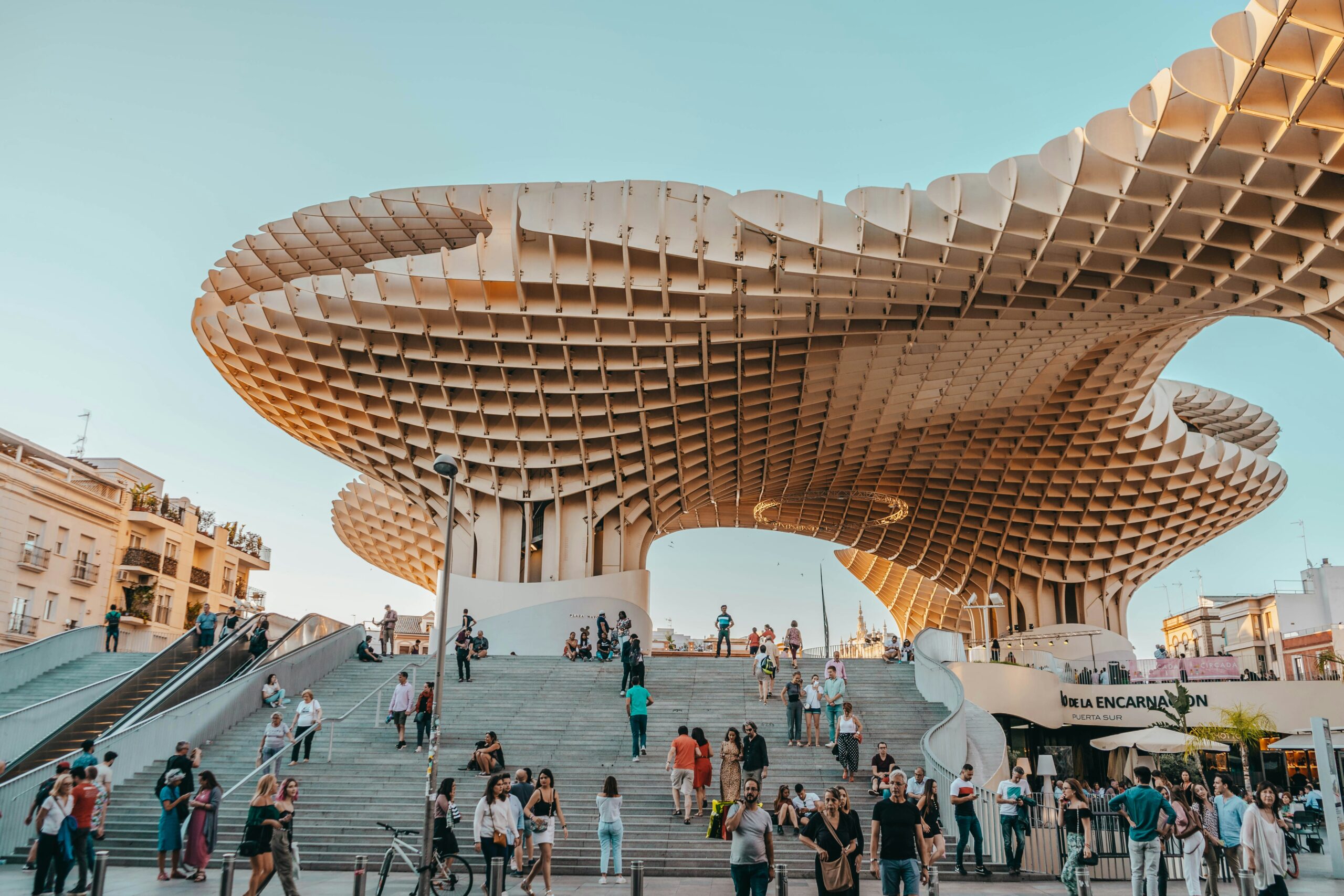
Walk back across the river toward La Encarnación plaza, dominated by the Metropol Parasol—a massive wooden structure nicknamed “Las Setas” (The Mushrooms) for its undulating forms. Completed in 2011, this contemporary intervention sparked controversy but has become a city landmark. An elevator ascends to the rooftop walkway, offering 360-degree views across Seville.
The ground level houses a market and archaeological museum displaying Roman and Moorish ruins discovered during construction. The plaza itself has become a popular gathering spot, particularly at sunset when the structure’s organic forms glow golden.
Spend the afternoon exploring nearby shopping streets. Calle Sierpes and Calle Tetuán form the main pedestrian shopping district, where international brands mix with local boutiques. For traditional goods, seek out hat shops (Seville’s women are famous for their elegant headwear), fan makers (an essential accessory in Seville’s heat), and mantilla (lace veil) specialists.
Evening: Riverside Sunset and Dinner (7:00 PM – 10:00 PM)
As evening approaches, head to the riverside. The Torre del Oro (Gold Tower), a 13th-century defensive tower, glows in the setting sun. Walk along the river toward the modern bridges or rent bicycles to cover more distance.
For sunset drinks, the rooftop terrace at EME Cathedral Hotel offers spectacular cathedral views, though prices reflect the location. More affordable alternatives include riverside bars near the Maestranza Bullring.
Dinner tonight might explore Seville’s contemporary dining scene. Abantal, with its Michelin star, reinterprets Andalusian ingredients through modern techniques. Alternatively, return to traditions at Restaurante Oriza, where classic Sevillian dishes are executed with precision in an elegant setting.
Essential Seville Information
Getting Around: Seville’s historic center is compact and walkable. The efficient tram connects Plaza Nueva with the San Bernardo train station. Rental bicycles (Sevici bike-share) make exploring easy, with dedicated lanes along major routes. Taxis are affordable and readily available.
When to Visit: Spring (March-May) is ideal—warm weather, orange blossoms perfuming the air, and Semana Santa (Holy Week) and Feria de Abril festivals. Summer (June-September) sees temperatures often exceeding 40°C—visit if you can handle extreme heat and want lower prices. Autumn offers pleasant weather with fewer crowds. Winter is mild but can be rainy.
Semana Santa: Holy Week features elaborate processions with baroque floats carried by robed penitents. The atmosphere is intensely emotional and uniquely Sevillian. Book accommodations months in advance if visiting during this week.
Feria de Abril: Two weeks after Easter, Seville’s Spring Fair transforms a dedicated fairground into a temporary city of casetas (tents). Locals dress in traditional flamenco garb, ride horses, and party until dawn. Many casetas are private, requiring invitations, but public ones welcome visitors. The fair represents Seville at its most exuberant.
Beyond 48 Hours: With more time, explore the Macarena neighborhood and its medieval walls, visit the Hospital de los Venerables art collection, take a day trip to nearby Córdoba or Jerez, or simply slow down and adopt the Sevillian rhythm—late meals, afternoon siestas, and evenings that stretch past midnight.
Seville rewards returning visitors. The city reveals itself gradually, and two days merely introduces its charms. But even a brief visit explains why Sevillanos insist theirs is not just a beautiful city but the most beautiful—where architecture, culture, and lifestyle combine into something approaching perfection.